Unsorted Used Clothing Wholesale or Sorted Lots: Which Fits Your Business
By the Recycling Italy team
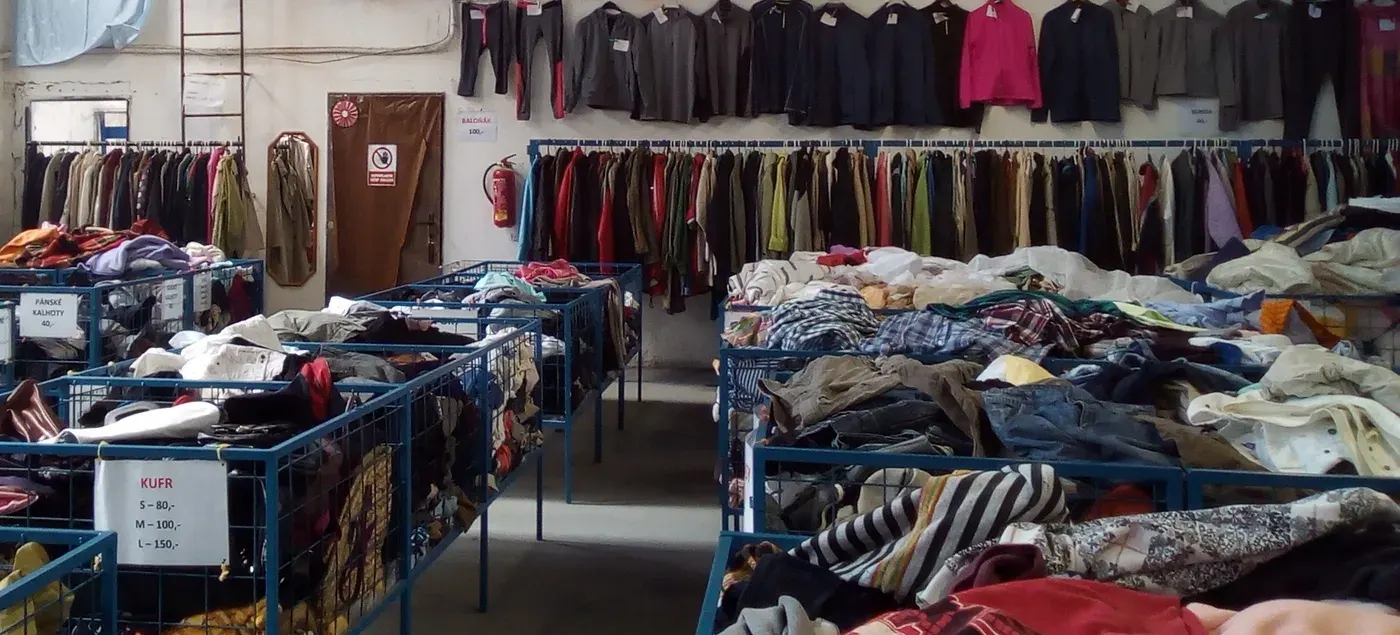
Unsorted used clothing wholesale means buying garments that have not yet been divided into quality tiers. You pay by weight for a mix of good pieces, ordinary ones and some that cannot be resold, and the sorting work moves to you. A sorted lot reverses the arrangement: someone has done that work, and the tier tells you what to expect.
What unsorted used clothing wholesale means next to sorted lots
In a sorted lot the garments have been separated into categories and quality levels. The tier names that level, and the written offer confirms the tier and the contents. Lots are sold by weight in both cases, so the weight on the invoice says nothing about how much of it you can put on a rail.
Unsorted material is the stage before. Garments are gathered and baled with little or no separation, so the same bale can hold a good jacket beside a worn-out sweater. Whether an unsorted lot is available for a given order is something you ask in the enquiry, and the written offer states what you are buying.
How the trade uses the word
The term is not only ours. A 2025 trade report on United States exports to Guatemala, carried by FashionUnited, describes "unsorted 'ropa cruda' bales" that are in high demand among local businesses preferring to do their own sorting. Those buyers do their own sorting, and the report's lead author says that local sorting adds economic value and creates jobs.
The same report describes a two-stage routine at the importer's end: first removal of non-reusable items and separation of accessories and shoes, then detailed quality grading. It reports a waste rate of about 12.2 percent for unsorted clothing against about 5 percent for sorted imports. Weigh that source accordingly: the study was commissioned by a US used-clothing wholesaler, and the figures describe one destination market, not your lot.
What carries over is the logic. A buyer who sorts accepts a higher share of waste in exchange for control over the categories, and a buyer who wants a smaller share of waste buys the work already done.
Who benefits from unsorted second hand clothes bulk
This kind of purchase fits three profiles. The first is a business with its own sorting line, which wants to pick pieces for its customers and cares less about what a supplier thinks is best. The second is a seller who works in several markets and can place pieces that others would discard. The third is a buyer who needs raw material for projects, not finished garments.
The match is poor for anyone who needs a fixed standard, such as a boutique with a defined look, or a buyer with no route for waste. Those buyers should read the article on sorting grades and choose a tier.
What research says about the unknown inside a bale
Fashion for Good published a new report, Sorting for Circularity: Project Rewear, on 12 May 2026. Its news page says the team examined 8,280 garments across four European countries and that 37 percent had no damage at all.
Those figures come from a different stage of the chain than a wholesale purchase from Italy, so do not transfer them to your lot. The point is a narrower one: the label on a bale is a description, and the only way to know its contents is to open it. A buyer who sorts accepts that task knowingly. A buyer who does not want it should ask for a tier and for photos.
The sorting you take on
A working routine for unsorted stock follows the same order the trade uses, in simple steps.
- Take out everything that is not clothing: bags, shoes, loose accessories, packaging and household items.
- Pull the pieces that are clean, whole and in season, and set them by category.
- Set aside what needs washing, mending or a new button.
- Divide what is left by the next use: cleaning cloths, stuffing or recycling.
- Dispose of the rest through a route that accepts it.
WRAP, the UK waste and resources body, notes on its recycling page that sorting into feedstock to meet recycler requirements includes removing non-target items such as zips, and that most textiles sent for recycling are mechanically recycled into products such as non-wovens, wipers, stuffing and insulation.
It also says that bales prepared for recycling should be of far higher environmental and economic value than unsorted volumes. If you plan to pass on rejects, sort them by what the recycler asks for, not in one bag.
Waste rules for a buyer who sorts
The pieces you cannot resell leave the goods stream and enter the waste stream. Directive 2008/98/EC, the Waste Framework Directive, defines waste in Article 3(1) as "any substance or object which the holder discards or intends or is required to discard". Once you discard the reject pile, it is waste in your hands, and national rules decide who may collect and treat it.
The European List of Waste, set by Commission Decision 2000/532/EC, gives textile entries that waste handlers use when they describe such material.
| Code | Entry in the List of Waste |
|---|---|
| 15 01 09 | Textile packaging |
| 19 12 08 | Textiles (under 19 12, wastes from the mechanical treatment of waste, for example sorting, crushing, compacting, pelletising) |
| 20 01 10 | Clothes (under chapter 20, municipal wastes) |
| 20 01 11 | Textiles (under chapter 20, municipal wastes) |
Which code fits your reject pile is for your waste contractor to say. Italy shows how detailed national law can be. Article 183 of the Environmental Code, Legislative Decree 152/2006, defines waste management as collection, transport, recovery, including sorting, and disposal of waste, and Article 205 lists textiles among the fractions for separate collection by 1 January 2022.
Your own country may differ in any of these points. The rule says what the framework requires of anyone in the trade; how it applies to your premises and your volumes is for your adviser or your local waste authority to confirm. Ask them before the first delivery, not after.
Sorted vs unsorted used clothing: where the cost moves
The choice is not one of good against bad. It is a question of who does the sorting and who carries the risk. When the supplier sorts, you pay for that labour inside the weight-based terms and you receive predictable goods. When you sort, you take on the labour, the space, the waste and the time.
| Question | Sorted lot | Unsorted lot |
|---|---|---|
| Who sorts | The supplier | You |
| What the offer says | Category, tier, contents | Category and the nature of the lot |
| Spread of quality inside the lot | Narrower | Wider |
| Waste you must dispose of | Smaller share | Larger share |
| Space and labour on your side | Little | Tables, dry storage, staff time |
| Best fit | Defined shop look, fast start | Own sorting line, many outlets |
Be honest about your own capacity. A reseller with staff, tables and a disposal route may find unsorted material profitable. A seller who works alone from a small unit and needs stock on the rail by the weekend will probably lose time.
The risks to price in
Unsorted does not mean unpredictable only in quality. It also means unpredictable in labour. Plan for the following before you order.
- A share of the weight will not be sellable, and you pay for it by the kilo like everything else.
- Damp or soiled items can affect neighbouring garments in a bale.
- Sorting needs space: dry storage and tables, not a corner of a room.
- Waste must be disposed of under your country's rules, which is a cost on your side.
- The mix can change from one order to the next, so a good first lot says little about the second.
Work out your real cost on the first lot. Open the bales one at a time and make four piles: ready to sell, needs washing or repair, another use, waste. Weigh each pile, then divide what you paid by the weight of the first two. That figure is your cost per sellable kilo, and it is the only fair way to compare with a sorted tier.
Weight, condition and style vary by lot in every case, and photos are indicative only. With unsorted goods the spread is wider, which is the point of buying them and also the danger.
Handling and storage after delivery
Keep the bales off the floor and away from outside walls, and open them only when a table is free, because a bale opened and left for days takes up space and collects dust. Sort what you open on the same day, bag the reject pile as you go and keep it away from the clean pieces.
Check the smell and the feel of each bale at the first opening. A damp bale should be spread out to dry at once instead of being shut again, and any piece with visible mould should leave the clean stream. Whether a piece can be saved is a question to settle against your margin, not a rule.
How to describe your expectations in an enquiry
A vague message such as "I want unsorted clothing" gets a vague offer. A useful message names what you resell and how you sort: the category, the season, the sizes that sell, how many people sort, what share of the lot you can accept as unusable, and where you ship to.
Say also whether you would take a sorted lot if unsorted is not available. That one line saves a round of emails. The minimum order depends on the product type and is confirmed in the offer, so mention your rough volume. You can ask for photos or a short video of your lot before you confirm, and with unsorted goods it matters more than with any other.
A middle path
Many buyers start with a sorted tier, learn what sells in their market and move to unsorted lots once they have a process. Others do the reverse and keep unsorted for a small part of the order. Both ways work, provided you change one thing at a time: if you switch the tier and the category together, you will not know which change moved your results.
The beginner guide describes the first orders, and the stock clothing page shows how stock is presented. For the question of who to trust with a first order, see the notes on choosing a supplier.
Writing to us
Send your enquiry through the contact form or to [email protected]. State your category, your sorting capacity and your destination country, and ask directly whether an unsorted lot is available.
Frequently asked questions
Is unsorted clothing cheaper than sorted clothing?
Not automatically. The terms for each lot are stated in the written offer, and what you pay by weight reflects what is in the lot. The labour of sorting, the waste and the storage you need are costs that you take on yourself with unsorted goods.
Does unsorted mean the clothes are unusable?
No. Unsorted goods hold usable garments of different levels, mixed with some that cannot be resold. The share varies from lot to lot, and nobody can state it in advance, so ask for photos or a short video of the lot before you confirm.
What happens to the pieces I cannot sell?
They become waste in your hands, and the Waste Framework Directive defines waste as what the holder discards or intends to discard. National rules decide who may collect and treat it, so agree a disposal route with a licensed contractor before the first delivery.
How do I know which tier I would get when I buy sorted?
The tier names a quality level, and the exact tier and contents are confirmed in the written offer. Because different suppliers use different names, read the contents line by line and compare it with your own idea of the level.
What should I tell the supplier about my sorting capacity?
Say how many people sort, how much space you have and what you do with the waste. The supplier can then judge whether unsorted material suits you, or whether a sorted tier would be safer for the first order.
Is the share of waste in unsorted bales a fixed number?
No. A 2025 trade report on one importing market gave about 12.2 percent for unsorted and about 5 percent for sorted imports, but that describes its own data, not your lot. The share changes by lot, so measure it on the first delivery.