How to buy second hand clothing wholesale: a first-timer's route
By the Recycling Italy team
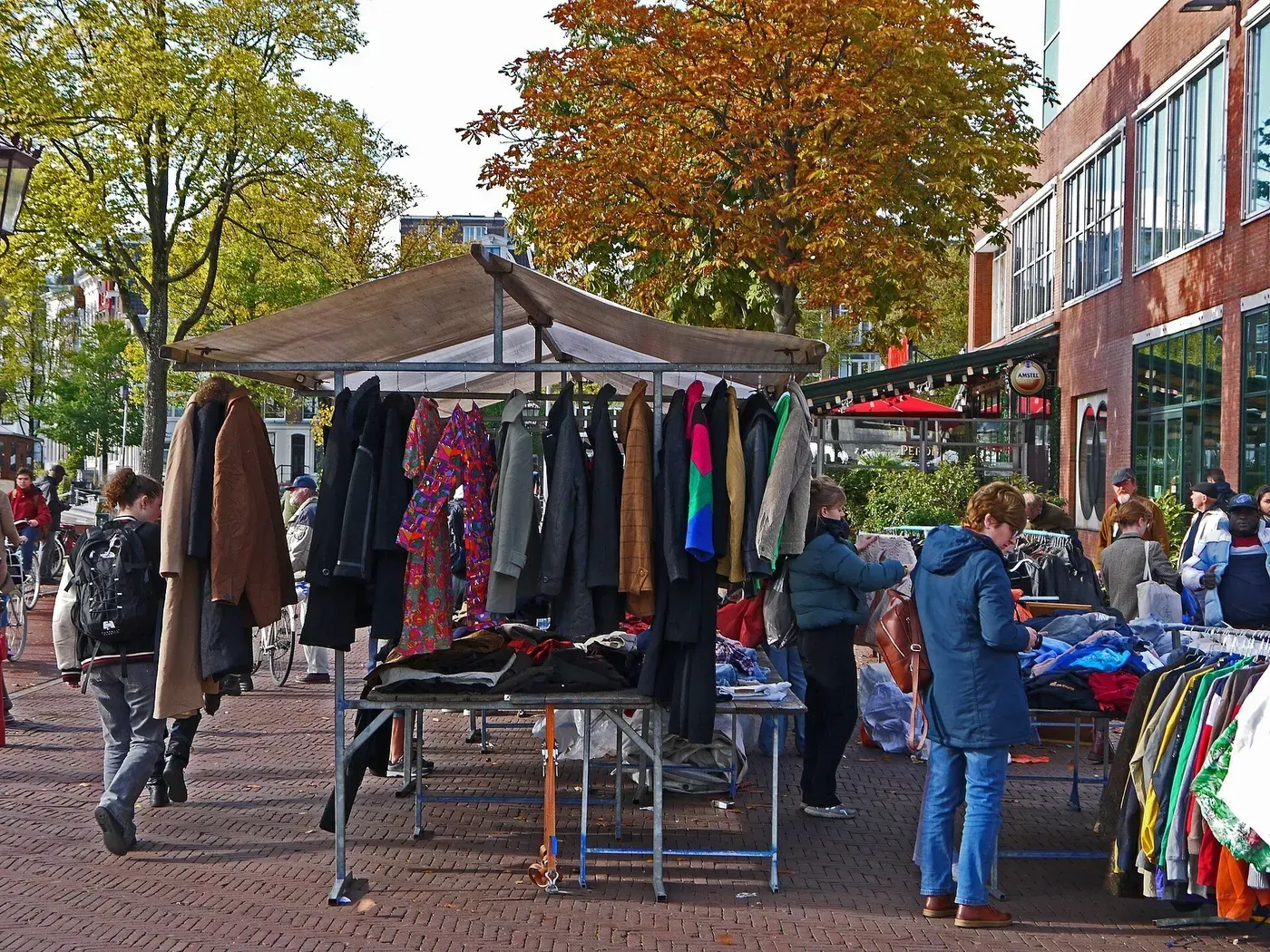
To learn how to buy second hand clothing wholesale, follow the order of a real deal. Choose a category and a tier, check how the goods are classified, send an enquiry, verify the supplier, read the offer, confirm by email or pro forma invoice, arrange delivery and inspect the lot. Keep each step on paper.
The steps and the paper trail at a glance
A first-time buyer can keep this table beside the keyboard. Each row names the step and the document you should be holding when it is done; a row without its document is a step you have not finished.
| Step | What you do | What you hold afterwards |
|---|---|---|
| Category and tier | Decide what your shelf needs | A short written brief |
| Classification | Ask which commodity code applies | Weight per product family |
| Enquiry | Send category, tier, season, sizes, quantity, VAT number | Your sent email |
| Supplier check | VIES result, company report | A printout or screenshot of each |
| Offer | Read category, tier, unit, packing, minimum | The written offer |
| Confirmation | Confirm by email or pro forma | Confirmation plus pro forma |
| Delivery | Agree carrier, address, receiving hours | Transport document |
| Arrival | Compare lot with offer, photograph differences | Photos and a dated note |
Step 1: pick the category and the tier before the supplier
Lots are sold in bulk by category and by quality tier. The groups are clothing, shoes, toys and bric-a-brac, which covers curtains, table linen, bedding and similar household items. Decide which of them your shop or stall really sells before you read a single offer.
Then look at the tier. A name such as cream points to a quality level; the exact tier and what sits inside the lot are confirmed in the written offer, not on a category page. The catalog shows how the groups are laid out, and it is a good place to find the words a supplier will use.
Step 2: know what customs call the goods
Even a small buyer meets a commodity code sooner or later, because carriers, invoices and customs forms all ask for one. For worn clothing the heading is 6309, "worn clothing and other worn articles" in the UK Trade Tariff, which follows the international Harmonized System. The European Environment Agency notes that the EU's Combined Nomenclature uses the same heading, with 6310 reserved for rags and scraps.
Chapter note 3 of that tariff chapter limits heading 6309 to a list: clothing and clothing accessories, blankets and travelling rugs, bed, table, toilet and kitchen linen, furnishing articles, and footwear and headgear. To qualify, the articles must show signs of appreciable wear and must be presented in bulk or in bales, sacks or similar packings.
Toys are not on that list, so they fall under other headings. How your own shipment is classified is a question for your customs agent, who will also want the weight of each product family, so ask the supplier for it per category.
Step 3: write an enquiry that gets a useful answer
A message that says only "used clothes, how much?" gets a vague reply. Name the category, the tier you have in mind, the season, the sizes you resell and the quantity you can store and sell through. A reseller of children's wear and a reseller of men's jackets need different lots, and the supplier cannot guess which of you is writing.
If you want a checklist for the message itself, these are the lines to include:
- the category and, if you know it, the tier;
- the season and the sizes you resell;
- the quantity in kilograms you can store and sell through;
- your country, company name and VAT number;
- a request for photos or a short video of the lot before you confirm.
Add your country, your company name and your VAT number, because delivery terms and costs are arranged order by order and the paperwork starts from those details. Send the enquiry to [email protected] or use the form on the contact page.
Step 4: check the supplier with public data
Before you pay anyone, spend ten minutes on public registers. Ask for the supplier's company name, address and VAT number, then enter the number in VIES.
The European Commission describes VIES as a search engine, owned by the Commission, that returns whether a number is valid or invalid, and Your Europe adds that for data protection reasons the national authorities will not supply the name and address of the holder. A valid result tells you the number is registered; it does not tell you who is behind it.
For an Italian supplier the next stop is the Registro Imprese. The registry's own site says that to run an economic activity as a business in Italy, registration with the Registro Imprese kept by the Chamber of Commerce is mandatory.
Its company report, the visura camerale, lists the legal form, registered office, tax code, the activity carried out, officers and, where relevant, registers, roles and licences. An English version exists for foreign buyers. Compare the name and address on the report with the offer and the invoice: they should match.
How to buy second hand clothing wholesale without overbuying
Everything that follows rests on the offer, so read it slowly. Check the category, the tier, the packing format and the weight. Lots are sold by weight, which means quantities are counted in kilograms, and a lot that looks small on paper can fill a lot of shelf space once it is opened.
No two lots are identical: the weight, the condition and the style move from one lot to the next, and any photo or description is only a guide. Request pictures, or a short video, of the lot you are about to take, and do it before you say yes.
If the minimum order is not stated, ask: it depends on the product type and is confirmed in the offer. How an offer is put together is covered in the guide to wholesale pricing.
Step 5: confirm by email or pro forma and fix the payment terms
An order counts as confirmed when you hold it by email or on a pro forma invoice. Payment terms are agreed in writing, so a spoken understanding is not enough, however friendly the conversation was. Keep the offer, the confirmation and the invoice together in one folder; you will want all three side by side if a question comes up when the lot is unpacked.
Say in the same exchange which law governs the contract if you and the seller are in different countries. Where Italian law applies, the Civil Code sets default rules for sales of goods. They are defaults only: the code itself allows the parties to agree otherwise, so the rules below matter mainly when the written terms are silent. A cross-border sale can also fall under other rules, so ask an adviser which ones apply to yours.
What the Italian Civil Code says about delivery and defects
On delivery, Article 1510 says that, unless the parties agree or custom says otherwise, when the goods have to be carried from one place to another the seller is released from the duty to deliver by handing them to the carrier or forwarder, and the transport costs are on the buyer. The seller's duty is therefore tied to the handover, which is why the offer should say who books the carrier and who pays.
On defects, Article 1490 makes the seller responsible for defects that make the goods unfit for their use or appreciably reduce their value, and it says a clause excluding that responsibility has no effect if the seller knowingly kept quiet about the defects.
Article 1497 covers goods that lack the promised qualities, where the shortfall must exceed the tolerances set by trade custom. For used goods, that is the reason to put the tier and the description in writing: the offer defines what was promised.
Step 6: arrange the delivery
Goods travel by road from Marcianise to European customers, and terms and costs are arranged per order. Say where the lot will be unloaded and whether a full-size lorry can reach the door or only a smaller van. Mention the hours when someone can receive goods, and say whether a pallet truck or a loading ramp is on site.
Goods that cannot be unloaded on the day cost everyone time. A lot that arrives at an address nobody has checked is a cost you could have avoided. Agree, too, who will be there to receive and sign for it. The page on delivery countries lists the destinations served, and the Germany guide shows how VAT numbers and the CMR consignment note fit into a cross-border order.
Step 7: check the lot when it arrives
Put the paperwork next to the goods and compare: category, tier, packing format and the weight shown on the documents. Open several bags from different parts of the delivery, not only the ones on top, and keep a few photos of anything that looks off.
The clock matters here. Article 1495 of the Civil Code says the buyer loses the right to claim for defects unless he reports them to the seller within eight days of discovering them, unless the parties or the law set a different period, and the claim lapses in any case one year after delivery.
No report is needed if the seller admitted the defect or hid it. Article 1511 adds that, for goods carried from one place to another, the period to report apparent defects and quality shortfalls runs from the day of receipt. If something does not match the offer, write to the supplier the same day and attach the photos.
After unpacking: store and sort with the lot in mind
Used textiles need a dry place. The European Environment Agency notes that damp textiles, or textiles wetted by rain, can be contaminated by mould, and that this makes them valueless to collectors because slim margins make cleaning, washing or drying unviable. The point was made about collection bins, but it applies to your back room too: keep bales off the floor and away from damp walls until you have sorted them.
Open one bale at a time rather than the whole delivery, and photograph the contents before you start. If you later need to show how a lot matched the offer, a dated photo of the first open bale is worth more than a memory. Keep the packing material until you are satisfied the lot matches the offer.
Treat the first order as a trial
A first wholesale order second hand is easier to judge when it is modest and varied. Take one category, one tier and sizes you can sell within a season, then compare the result with what you expected. Buying used clothes in bulk for the first time is a test of your own sorting and selling as much as of the supplier.
Expect to sort the lot again at home by size, season and price point before it reaches the rail. That second sorting is where a reseller adds value, and it takes table space and working hours that you should plan for before the truck is booked.
If the first lot works, repeat it, widen it or move to the next category. If it does not, the written offer and your photos show what to change next time.
Many new buyers read the explanation of sorting grades before their first message, which saves a few rounds of questions. Your next step is small: write your category, tier and sizes in three lines and send them through the contact form.
Frequently asked questions
How do I choose between clothing, shoes, toys and bric-a-brac for a first order?
Start with what your customers already ask for. A clothing shop begins with clothing, a market stall that sells household goods begins with bric-a-brac. Taking a single category first lets you judge the quality and the weight of the lot before you add anything else.
What should an enquiry contain?
Give the category, the quality tier you have in mind, the season, the sizes you resell, the quantity you can handle, your country and your VAT number. With those details the supplier can send a precise written offer instead of a general reply.
Is a pro forma invoice the same as the final invoice?
A pro forma invoice sets out the order and its terms before payment. It is issued from the offer you accepted. Read it against the offer and tell the supplier about any difference before you pay, so the paperwork matches from the start.
How can I check a supplier before ordering?
Ask for the company name, address and VAT number, enter the number in the European Commission VIES tool, and for an Italian company compare the name and address with its Registro Imprese company report. These checks use public data and take a few minutes.
How long do I have to report a defect in the lot?
Under Article 1495 of the Italian Civil Code the default is eight days from discovery, unless the parties or the law set another period, and one year from delivery at most. Check what your written terms say and ask an adviser about your case.
Can I see my lot before I confirm the order?
Yes, photos or a short video of the lot can be requested before you confirm. Keep in mind that weight, condition and style vary by lot, so images are indicative and the written offer remains the reference document.