What shapes the wholesale price per kilo of second hand clothes
By the Recycling Italy team
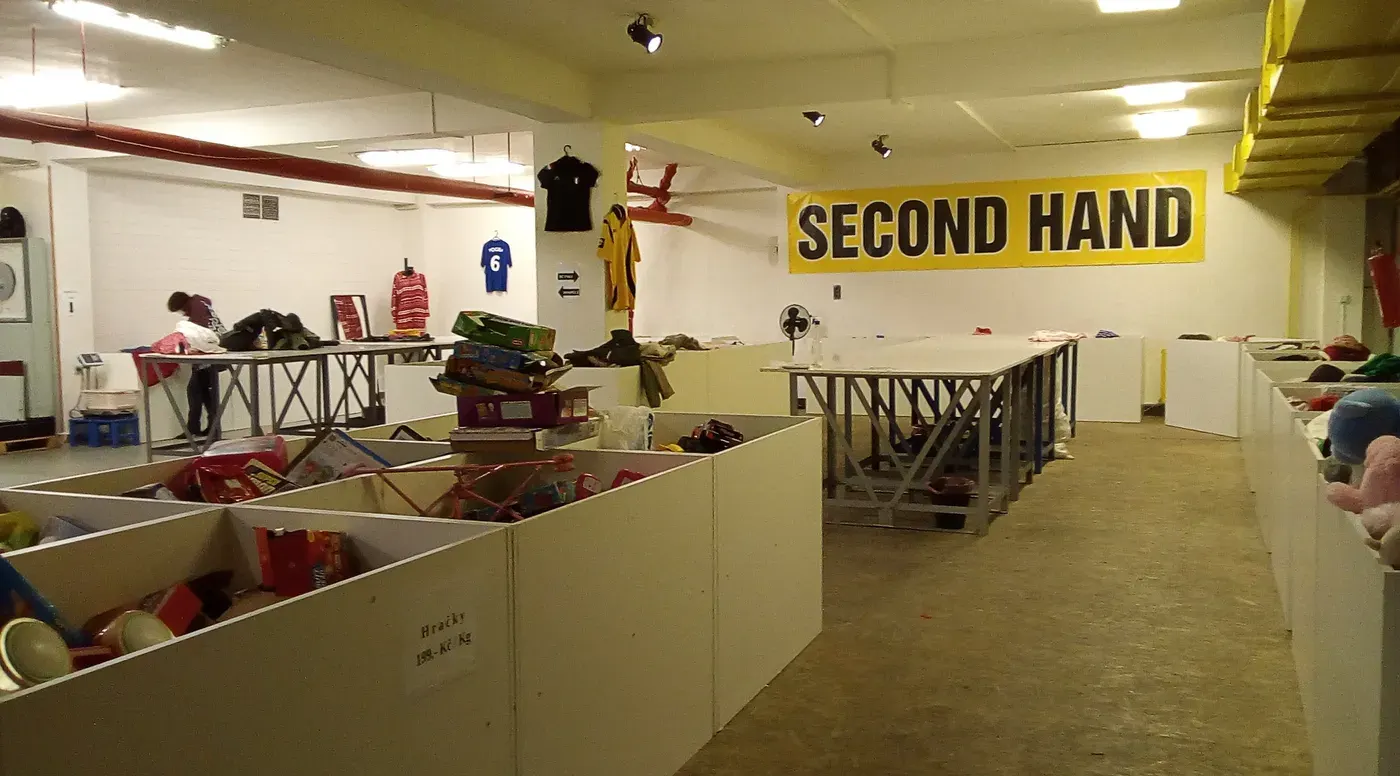
The second hand clothing wholesale price per kg depends on what is in the lot, not on weight alone. The tier, the mix of items, the season, the packing format, the delivery terms and the payment terms all move the figure. Two offers quoted per kilo can describe very different goods, and this article shows how an offer is built.
Second hand clothing wholesale price per kg: what it covers
Lots are sold by weight, so the kilo is the unit in which an offer is expressed. That unit says nothing by itself. It attaches to a category, a tier and a packing format, and it only makes sense once those three are named in the same document.
Weight is also confirmed, not assumed. Ask how it is measured and where it is written, because a lot of a given weight on paper is worth exactly what the paperwork says it is. This article quotes no figure for any Recycling Italy lot: those change from lot to lot and appear in the written offer. The only numbers below are public statistics, named and dated, and they describe a market, not an offer.
What public statistics say about a kilo of used clothing
Two European reports put a number on the average price of used textiles leaving the EU in 2019, and they disagree. The European Environment Agency (EEA) says the average price paid per kilogram had dropped to about EUR 0.57, in constant prices, adding that importers were paying less per kilogram than some years earlier and that the fall may reflect lower quality or a saturated market.
Fashion for Good and Circle Economy give EUR 0.76 per kilo for EU-28 exports in the same year. Neither report explains the gap, so read the two figures as separate estimates, not as one series.
Eurostat's Comext database gives a more recent look at customs declarations under CN code 63090000, worn clothing and other worn articles. The table shows 2023 figures, retrieved in November 2026, with the average value worked out by dividing the declared value by the declared weight.
| Flow, 2023 | Weight | Declared value | Average per kg |
|---|---|---|---|
| Italy, all exports | about 168 thousand tonnes | EUR 127.3 million | EUR 0.76 |
| Italy, to other EU countries | about 18.9 thousand tonnes | EUR 18.9 million | EUR 1.00 |
| Italy, outside the EU | about 149.5 thousand tonnes | EUR 108.4 million | EUR 0.73 |
| Germany, all exports | about 452 thousand tonnes | EUR 324.1 million | EUR 0.72 |
Why a customs average is not an offer
These averages pool every grade, from rags-in-waiting to the best pieces, and every destination. Among Italy's ten largest single-country destinations by weight in 2023 the same code gives averages from about EUR 0.13 per kilo to about EUR 1.07, a spread of eight to one. The EEA warns that trade data rest on each country's own reporting, carry some uncertainty, and should be read as indicative.
So the useful lesson is the spread, not the middle. A single customs code covers lots that sell for very different amounts, which is why a buyer cannot read a per-kilo offer without the tier, the mix and the contents next to it. It is also why nobody can give you a "market price" for your lot from a statistics table. The offer for your lot is the only price that exists.
The tier changes what a kilogram contains
A tier names a quality level. A kilo from a higher level holds pieces that are in better condition and easier to put on a rail, so a reseller values it differently from a kilo with more worn items or more that need cleaning. The exact tier and the contents are confirmed in the offer, not on the category page.
When you compare two quotes, check first that both refer to the same tier. A lower quote for a lower level is not a bargain, it is a different product. Fashion for Good describes some rewearable goods as low value, sold on the second-hand market at low prices, where demand is expected to stop when volumes collected rise. Our guide to sorting grades shows how to read tier names.
Mix and category: a kilo of one is not a kilo of another
Garments differ in weight. A kilo of heavy jackets holds a handful of pieces, a kilo of light tops holds a great many, and the shelf you must fill is counted in pieces, not in kilograms. Shoes, toys and bric-a-brac behave differently again: curtains, table linen and bedding are heavy for the room they take, toys are bulky for their weight.
A mixed lot adds another variable. If it combines several categories, the offer should name them all, and say what share each represents where it can. Put the question directly: how many categories does the lot hold, and are they all listed in the offer? A buyer who knows the mix can predict what will end up on the rails and what will wait in the back room.
Season shapes how a lot is valued
A lot of knitwear is worth more to a shop in early autumn than in the middle of July, and a lot of summer dresses has the opposite curve. That is not the supplier's rule, it is how a reseller reasons, and it affects what you should accept. Say which season you are buying for and when the lot must be on your shelves.
The offer may also describe the mix by season, because a lot with many items from the wrong season ties up your cash until the weather turns. Raise this in the enquiry, not after the delivery arrives.
Where labour and logistics enter the figure
Sorting is manual. The EEA notes that it is labour-intensive and cheaper to do in countries with lower labour costs, that the market is characterised by tight margins, and that saving on labour can make the difference between operating with or without a profit.
It also points to ports: Belgium, Italy and the Netherlands have large export harbours. None of this tells you what any seller pays, but it explains why a kilo's price is built from handling as much as from garments.
Packing sits beside the goods. Bales, boxes and sacks are handled differently, and the format decides how much you can unload by hand, how you store the lot and how you sort it.
A lot in uniform bales is quick to count in, while a lot in mixed sacks takes longer to check when it arrives. Transport is priced and agreed order by order, so keep goods and transport as two lines in your comparison. The delivery countries page lists where goods go.
Incoterms: who pays for what, and where risk passes
The International Chamber of Commerce publishes Incoterms, a set of eleven three-letter trade terms that reflect business-to-business practice and clarify the tasks, costs and risks in delivering goods from seller to buyer. The US trade administration lists seven of the 2020 rules as usable for any mode of transport, among them EXW (Ex Works), FCA (Free Carrier), DAP (Delivered at Place) and DDP (Delivered Duty Paid).
The ICC explains one distinction that matters on a road delivery: under DAP the seller does not unload the goods, while under DPU (Delivered at Place Unloaded) the seller does. That single word can change who needs a forklift at your door. When an offer says "delivered", ask which rule and which named place it means, and read the per-kilo figure again with that answer beside it.
Payment terms, currency and VAT
Payment terms are agreed in writing. The European Commission's page on late payment says that under Directive 2011/7/EU on late payment, enterprises have to pay their invoices within 60 days unless they expressly agree otherwise and provided it is not grossly unfair, and that creditors are automatically entitled to interest for late payment, with statutory interest of at least 8 percent above the European Central Bank's reference rate.
EU countries may keep rules more favourable to creditors. Check which payment period your offer states, because it changes the real cost of a kilo to you.
Ask also which currency the offer is in, and whether VAT appears on the pro forma invoice. For a business buyer in another EU country, whether VAT is charged depends on the VAT number check explained in the Germany guide. Put the currency and the VAT treatment in your comparison table with every other line.
Questions that make a per-kilo figure comparable
A figure per kilo becomes comparable when the surrounding terms are written next to it. Before you accept or reject an offer, put these questions to the seller and keep the answers with the offer:
- What does one unit of packing weigh, and is the weight taken before or after packing?
- Roughly how many pieces does a kilo of this lot hold, as far as the seller can say?
- Which season and which sizes does the mix lean towards?
- Until when is the offer valid, and what is the minimum order for this product type?
- Which delivery rule, which payment period and which currency apply?
The minimum order depends on the product type and is confirmed in the offer, so do not read one product's minimum into another. A seller who cannot answer the pieces-per-kilo question may simply not know it for a mixed lot, which is itself useful information for your planning.
How wholesale used clothing is priced when you compare two offers
Put the offers in a table of your own. For each one, write the category, the tier, the mix, the packing, the weight basis, the delivery terms and the payment terms, then look at the quoted amount last. If any cell is empty, you are not yet comparing like with like.
The same discipline helps with supplier checks, which the article on choosing a supplier covers in more detail.
Mistakes that make an offer look better than it is
The most common mistake is to treat price by weight used clothes as the whole story and to ignore the tier. The second is to read the photos as a promise: pictures are indicative, and the lot you receive can differ from them in style and condition. The third is to accept a figure given by voice, with nothing in writing that you can compare later.
A fourth mistake is to haggle over the amount and leave the contents loose. Agree the tier and the mix first, and the amount then has something solid to stand on. If this is your first purchase, the first-order guide shows the full sequence. To get an offer you can compare, name your category, tier, season and quantity in an email through the contact form.
Frequently asked questions
Why do two offers per kilo look so different?
The kilo is only the unit. Each quote may refer to another tier, another mix of categories, another packing format or other delivery terms. Until those match, the figures do not compare. Ask both suppliers to name the same details in writing.
Does a heavier lot always give me more to sell?
No. Weight and the number of pieces are different things. Heavy jackets and light tops weigh differently per piece, so a lot of the same weight can fill very different amounts of shelf space. Think in pieces and sizes you can sell, then in kilos.
Can I get a price list for every category?
Offers are made for a specific lot, because weight, condition and style change from one lot to the next. Send the category, tier, season and quantity you want, and the written offer will state the terms for that lot.
Is delivery included in the quote per kilo?
Delivery terms and costs are arranged per order, so read them as a separate item in the offer. Ask for them in writing for your address and compare the goods and the transport as two lines before you decide.
Can customs statistics tell me what a lot should cost?
No. Eurostat and EEA figures are averages across every grade and destination, and the same customs code shows very different values by country. Treat them as market context only and judge an offer by its tier, mix, packing and terms.
Which Incoterm should I ask for on a road delivery?
That is for you and the seller to agree in writing. Ask which rule and which named place the offer uses, for example whether the seller unloads at your door. Your freight forwarder or customs agent can advise on the choice for your shipment.