Second hand clothing sorting grades explained: what each name tells a buyer
By the Recycling Italy team
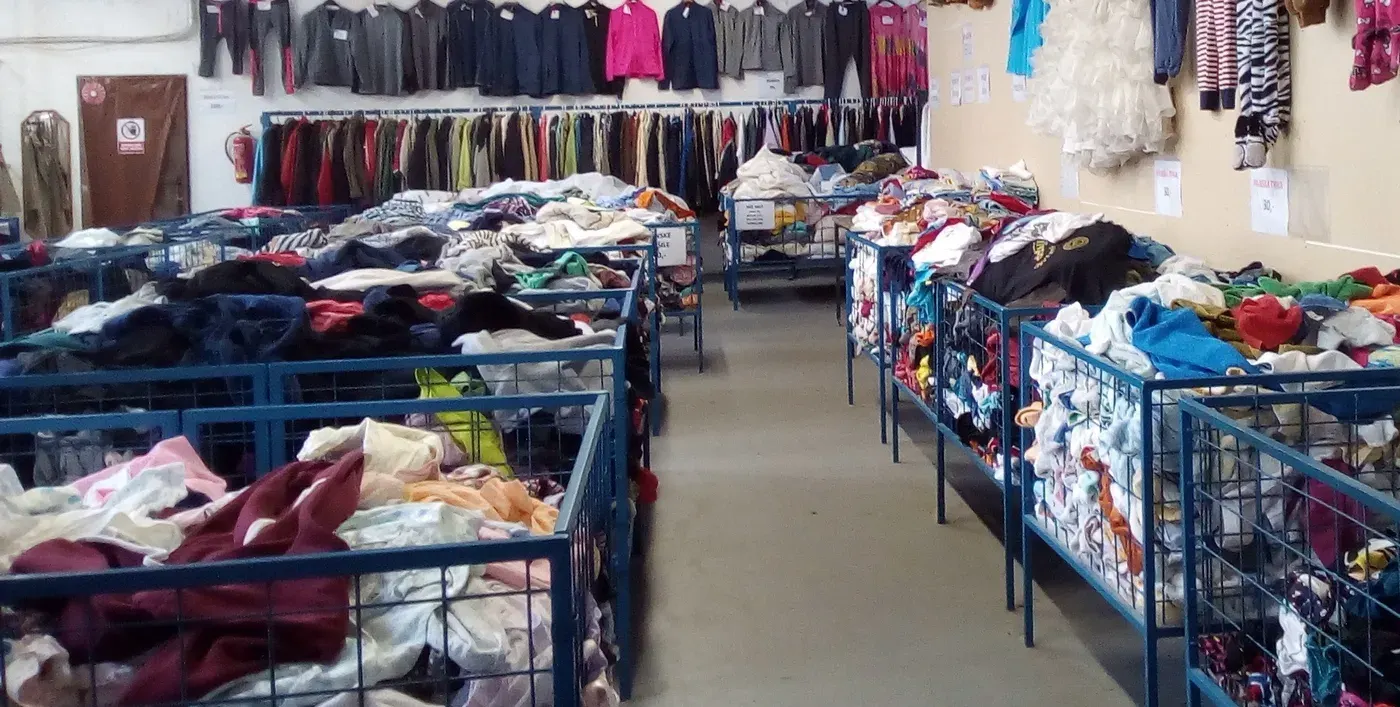
Second hand clothing sorting grades are names for quality levels, such as cream, extra, grade 1 and grade 2. They are not percentages and they do not count defects. The same category of garments can sit at several levels, so the grade written in the offer decides what you actually receive for a given weight.
Second hand clothing sorting grades are names, not measurements
After goods are collected, they are sorted, and the sorted streams are packed and sold as separate lots. A grade is the label a seller puts on one of those streams. Because each seller names its own streams, the label tells you something only when you also read how that seller describes it.
Names in use include cream, extra, grade 1 and grade 2. Where a given seller places each one on its ladder has to be read from its own offer. At Recycling Italy the exact tier and the contents of the lot are confirmed in the written offer, and a tier name should never be taken as a number.
What sorting does: reuse on one side, recycling on the other
A report by Fashion for Good and Circle Economy (2022) describes manual sorting as a step-by-step job. First the non-textile items, such as household waste and footwear, are taken out. Then the sorter picks the articles that have value on the second-hand market, which the report calls rewearables, and separates those with other end-markets: fibre-to-fibre recycling, wiping cloths or downcycling.
The European Environment Agency (EEA) draws the same line in its 2024 briefing. Reuse means using items again as they are, while recycling means breaking them down to make new products, and most recycled fibres are downcycled into items such as rags or insulation.
A buyer of wearable lots is therefore buying the output of the first stream only. Your grade question is really a question about how well that stream was separated from the rest.
Where cream sits in the trade's own vocabulary
Trade reports do use the word. The Fashion for Good glossary says rewearables are categorised into cascading qualities, with the cream, or highest quality, and vintage categories usually sold domestically, while other qualities are categorised from A to C or from 1 to 3 and are mostly exported. The EEA writes that collectors typically pre-sort to extract high-value textiles, so-called cream, to sell in their own shops.
The same Fashion for Good report gives an example of what the top fraction can look like: items from well-known brands or ones that still have a price tag on them.
That is the trade's picture of cream in general, not a promise about any offer. In a Recycling Italy offer, known brands can appear in mixed lots but they are not assured, and the contents of a tier are confirmed in writing for that lot.
The report adds that only a minor part of these high-quality items, about 10 percent of the volumes collected, is resold locally, and that the European sorting industry mostly serves global second-hand markets. A grade name therefore often travels between countries and languages, which is another reason its meaning drifts.
Why grade names differ between suppliers
There is no single scale. The Fashion for Good report notes that textile sorters categorise textiles to meet the specific requirements of their clients, so all sorters have different product categories. One seller's second grade can be another's first, and a seller who sorts for a wholesaler in one country may cut the ladder differently from one who sorts for market stalls in another.
Customs codes cannot settle the question either. The EEA explains that code 6309 is meant for worn textiles fit for reuse and 6310 for rags and scraps, but that classification does not necessarily describe the true state of what is exported, and that a lot sold unsorted as originals can be declared as 6309 although it may hold items unfit for reuse.
A code is a trade statistic; a grade is a seller's description. Only the second one can tell you what is in your bale.
Why one category looks different at each tier
Take women's summer tops. At one level a buyer can expect to put most of the lot straight on the rail. At another, the same category needs more work at your own counter: more sorting, more rejecting, more careful pricing. Neither is wrong. They suit different businesses, and the decision is yours.
Someone who asks for cream grade second hand clothes tells the seller that the top level in that seller's scale is wanted, and the seller should answer with what its cream means. The same applies to anyone who asks for extra grade used clothing: the name opens a conversation, and the offer closes it by stating the contents.
The economics behind the top fraction
Why do sellers care so much about the top of the ladder? Because that is where the money is.
Fashion for Good reports that typically 55 percent of the input arriving at a sorting facility can be deemed fit for the second-hand market, and that the revenue comes mainly from the highest-quality part of it: top-quality rewearables are estimated to account for 50 percent of revenue, and all rewearable fractions together for up to 90 percent.
These are estimates for the sorters in the report's focus countries, and they say nothing about how any one seller defines its tiers.
They explain something else: a top tier is the part of the output that brings the most revenue, so a seller may well want to keep it undiluted, and a buyer has good reason to ask how the lot was put together. Quality that is named only in conversation cannot be checked later.
Waste or used goods: why the description must say what the lot is
The EEA points out that countries generally classify textile products as textile waste when the holder intends to dispose of them, and that these textiles can regain reusable status after sorting. Some countries add rules of their own: Germany and the Walloon region of Belgium classify textile products disposed of in bags as waste, because the collector cannot see the contents of each bag before opening it.
For a wholesale buyer the lesson is practical. Whether a lot is treated as goods for reuse or as waste affects the paperwork around it, so a lot sold for resale should be described as such, in a tier, with its contents. A vague "mixed used clothing" label leaves the question open, and an open question is where customs and transport trouble starts.
Reading the tier line in an offer
Offers describe tiers in different amounts of detail. The table shows what each version lets you do and what to ask next.
| What the offer says | What it gives you | What to ask |
|---|---|---|
| A tier name and nothing else | A label with no content | The seller's own explanation, in writing |
| Tier plus a description of contents | Something to compare between sellers | Photos or a short video of that lot |
| Tier plus season, sizes and mix | A lot you can plan shelf space around | Weight per unit of packing |
| No tier at all | Nothing to check the delivery against | The tier, before you confirm |
How to ask for a tier
A request works best when it is built in a fixed order.
- Name the category, such as women's, men's or children's clothing.
- Name the tier you are interested in, or say that you want advice.
- Ask what the seller's tier contains and how it differs from the next one down.
- Add the season and the approximate weight.
- Request photos or a short video before you commit to anything.
Point three is the one buyers skip. Without it, you only know that a name was agreed, and nothing about what was agreed.
Why the offer has to state the tier
A tier mentioned in passing, in conversation or in a quick message, has no standing when a lot arrives and looks different from what you pictured. Written into the offer, it becomes the reference for the order. Orders are confirmed by email or pro forma invoice, so the tier belongs in that same document.
It also makes offers comparable. Two sellers can quote the same category at different rates per kilogram, and the gap may come from the tier alone. Without the tier on paper you cannot tell whether you are comparing like with like. The guide to cost structure shows where a higher or lower rate can come from.
Grades and brands are two separate questions
A higher tier does not mean named brands. Known labels can appear in mixed lots at any level, but they are not promised at any level. If brands matter to your customers, ask about them separately and read the article on branded lots sold by the kilo before you decide what to expect.
Mistakes buyers make with grades
The first is assuming that one seller's name matches another's. The second is buying the top level for every line when some stock sells quickly at a lower one. The third is reusing a tier name for a different category: what you learnt about clothing does not carry over to shoes, which are described separately, so ask again for each line.
Photos are the fourth. Weight, condition and style differ from lot to lot, and a picture is indicative only. Use it to check that the offer and the picture are in the same ballpark, not to count pieces.
If a lot photographs much better or much worse than the tier you were told, write back before the order is confirmed and ask why. For the full path from first enquiry to delivery, see the beginner guide to wholesale buying.
Choosing a first tier
A buyer with no history at all can begin from the middle of the ladder rather than from either end. That gives a realistic picture of what a lot of that category looks like when it reaches the counter, and it costs less in disappointment than starting at the top and being surprised, or at the bottom and being discouraged. The first order is a measurement of your own business more than a purchase.
Start from your customers. A boutique that sells curated pieces needs a different level of selection from a stall that moves volume at a low price per item. Write that down in two lines before you contact anyone and put those lines in the message. The clothing catalog shows the category pages if you want to see how the lines are laid out.
When you are ready, send the category, the tier and the season through the contact page or to [email protected], and ask the seller to say in the reply exactly what the tier contains.
Frequently asked questions
Is cream grade a percentage of good pieces?
No. Cream is the name of a quality level, not a percentage and not a count of defects. The exact tier and the contents of the lot are confirmed in the written offer, which is where you should read what it means for that lot.
Do all sellers use the same grade names?
The names are common in the trade, but each seller sorts and describes in its own way. Fashion for Good notes that sorters categorise to meet their clients' requirements. Compare the explanation in each offer, not just the label, and ask what separates one tier from the next.
Can I mix tiers in one order?
Ask in your enquiry. Lots are sold by category and tier, and the written offer states how an order with more than one tier is put together, so there is a document to check against on arrival.
Does a higher tier mean named brands?
No. Known brands can appear in mixed lots at any level, but they are not promised at any level. If brands matter for your customers, raise the point in the enquiry and look at the photos before confirming.
What is the difference between sorted grades and originals?
Originals are used textiles exported unsorted, which the European Environment Agency says are likely to hold items both fit and unfit for reuse. Sorted grades have been separated into quality levels. Ask which one the offer describes and where the tier is explained.
How do I check the tier when the goods arrive?
Compare the contents with the tier and category written in the offer, take photos, and report any difference in writing after delivery. A return needs an agreement made beforehand, so settle that point while the offer is still open.