Second hand shoes wholesale for shops and stalls: types, tiers, weight
By the Recycling Italy team
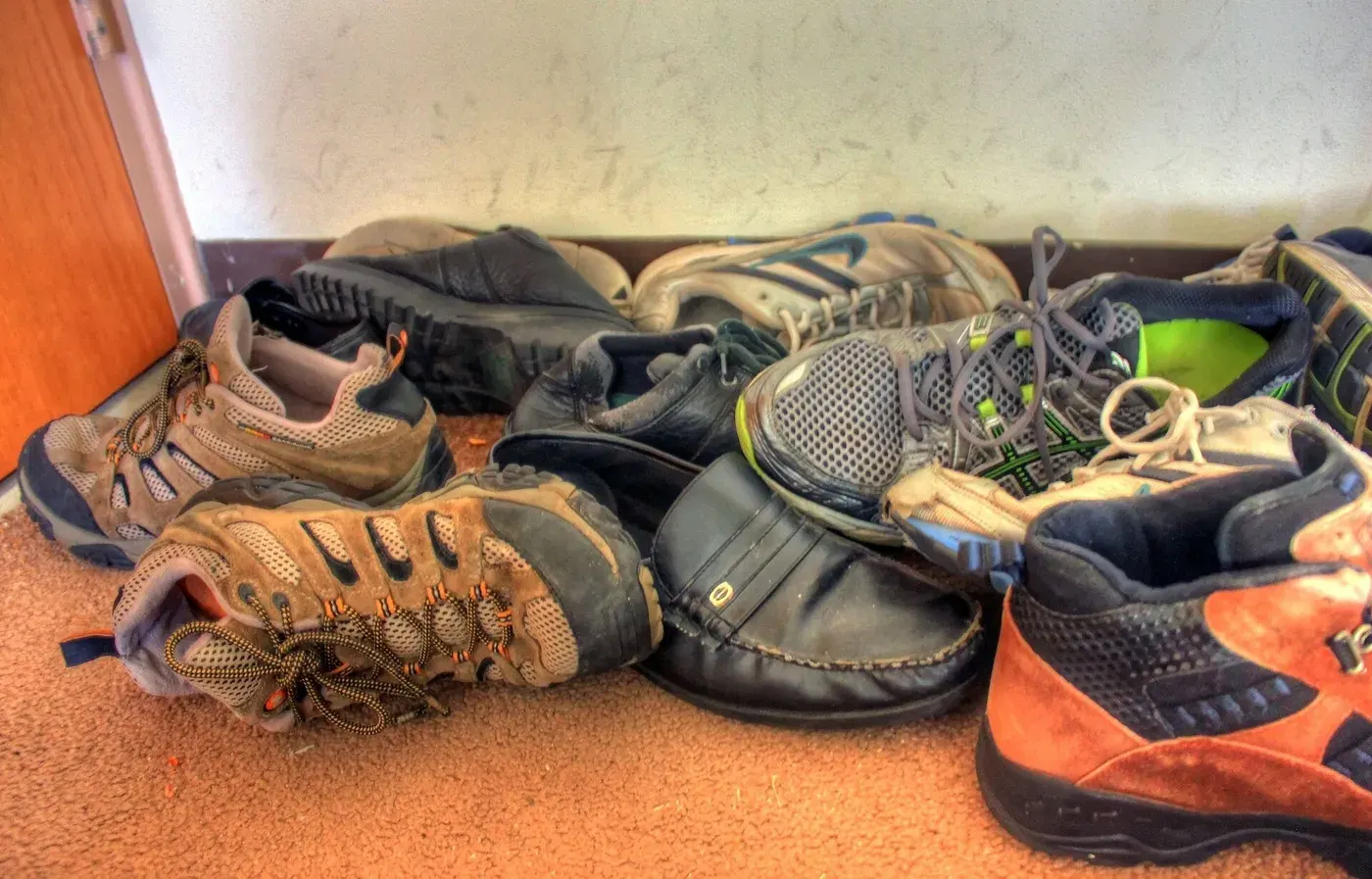
Second hand shoes wholesale lots are described by type of footwear, by quality tier and by weight, and the same description can cover pairs in very different condition. A buyer for a shop or a stall should know what each type contains, how the lot is weighed and which questions to put before confirming an order.
How second hand shoes wholesale lots are described
A written description of a shoe lot has three parts: the type of footwear, the tier and the weight. The type tells you what the customer will find on the shelf. The tier names the quality level, and the exact tier and contents are confirmed in the written offer. The weight is the unit the lot is sold in, since goods are sold per kilogram.
Every lot differs in weight, condition and style. Photos and descriptions show the kind of goods, not each pair, so treat them as indicative. Known brands can appear in mixed lots, but they are not promised, and a sports label in a photo is not a commitment about the rest of the lot.
The usual lot types
Summer slippers and sandals
These are light, so a kilogram holds many pieces, and they sell in a short window of the year. If you run a seasonal stall, ask when the lot was sorted for the season and which kinds of footwear it mixes, such as beach slippers, flat sandals and house slippers.
Sports shoes
Trainers and other sports footwear are the type most buyers ask for by name. The sizes run across a wide range, and the lot can include running shoes, casual trainers and training shoes in one description. Ask which sub-types the offer covers and whether adult and children's sizes are separated.
Boots and winter footwear
Boots weigh far more per pair than slippers, so the same weight in kilograms means fewer pairs. That matters when you plan shelf space and when you compare offers on different types. Check whether the lot is ankle boots, long boots or a mix, and whether it is meant for the cold season.
Mixed lots
A mixed lot combines types and is the widest way to start. It suits a buyer who is still learning what the customers want, because it shows which type sells fastest. The cost of that breadth is less control: you accept the mix as described in the offer instead of choosing each type.
Pairs, weight and how to compare
When a lot is sold by weight, the number of pairs depends on what is inside. A kilogram of slippers and a kilogram of boots are not comparable on pairs, so ask the seller to describe the type and, if possible, to give an approximate idea of how the pairs are packed. Compare offers on the same type and the same tier, otherwise the weight tells you very little.
If your customers buy by pair and you price by pair, ask how pairs are kept together in the packing. Put the question in writing, because the answer belongs in the offer and not in a half-remembered conversation. The guide to cost structure explains how to turn a weight into a unit figure of your own.
Sizes: three systems on one shelf
Shoe sizes are not one language. A 2024 article on shoe sizing describes the European Paris point system as sizes increasing by two thirds of a centimetre for each size, and the British barleycorn system as a step of one third of an inch per size. It calls these mutually incompatible systems used in different countries, with different systems often used for men, women and children.
There is also a measured system. Mondopoint, set out in the international standard 9407:2019, Shoe sizes - Mondopoint system of sizing and marking, is based on average foot length and foot width in millimetres. The same article gives the example that 290/120 indicates a foot length of 290 millimetres. Most second-hand footwear carries its original label, so a lot can contain pairs marked in several systems at once.
In practice, write the sizes you sell in the system your customers use, and ask how the lot handles pairs with unreadable or mixed size marks. A sandal with a worn insole label is still a sale, but only if your staff can measure it against a foot gauge.
What the footwear labelling directive says about used shoes
Directive 94/11/EC of 23 March 1994 concerns the labelling of the materials used in the main components of footwear for sale to the consumer.
Under Article 4 the label gives information on the material that makes up at least 80 percent of the upper and of the lining and sock by surface area, and of the outer sole by volume. It uses pictograms or written indications, and it must be affixed to at least one article of footwear in each pair.
The notable point for this trade is in Article 1. The Directive's scope excludes second-hand, worn footwear. A used pair is therefore not required to carry that label under the Directive, and the label that may be inside a used shoe is a leftover of its first sale, not a statement about the lot.
That does not remove other rules. Whether and how any labelling or safety rule applies to your resale is for your adviser to confirm for your market.
Customs headings for footwear and worn footwear
Footwear sits in Chapter 64 of the Harmonised System, and the UK Trade Tariff gives the main headings by the materials of the sole and the upper.
| Heading | Description in the Trade Tariff |
|---|---|
| 6401 | Waterproof footwear with outer soles and uppers of rubber or of plastics |
| 6402 | Other footwear with outer soles and uppers of rubber or plastics |
| 6403 | Footwear with outer soles of rubber, plastics, leather or composition leather and uppers of leather |
| 6404 | Footwear with outer soles of rubber, plastics, leather or composition leather and uppers of textile materials |
| 6405 | Other footwear |
| 6309 | Worn clothing and other worn articles |
Note 1 to Chapter 64 excludes worn footwear of heading 6309, and Note 3 to Chapter 63 lists footwear and headgear of any material other than asbestos among the articles that heading 6309 can cover, if they show signs of appreciable wear and are presented in bulk or in bales, sacks or similar packings.
A subheading note also defines sports footwear as footwear designed for a sporting activity that has or can take attachments such as spikes, sprigs, stops, clips or bars.
So a bale of worn shoes and a case of new shoes fall under different headings. Which code applies to your shipment, and what the importing customs office expects, is for your customs agent to confirm.
Chemical and protective-footwear rules to know
Entry 47 of Annex XVII to the REACH Regulation, as amended by Commission Regulation (EU) No 301/2014, says that leather articles coming into contact with the skin shall not be placed on the market where they contain chromium VI in concentrations equal to or greater than 3 mg/kg of the total dry weight of the leather. The same applies to each leather part in articles that contain leather parts. The regulation applies from 1 May 2015.
The entry carries a dated exemption. It says the limits do not apply to the placing on the market of second-hand articles that were in end-use in the Union before 1 May 2015. A reader can take two things from it: the exemption is tied to a date, and a pair that does not meet that date has no automatic exemption. Ask your adviser how the entry applies to leather footwear in a used lot.
Protective footwear is a separate case. Regulation (EU) 2016/425 on personal protective equipment defines such equipment as equipment designed and manufactured to be worn or held by a person for protection against one or more risks.
Its recital 8 says the Regulation applies to equipment new to the Union market, whether new or second-hand and imported from a third country. If a lot may contain safety boots or other work footwear, ask how it is handled.
Choosing a tier for footwear
A tier names a quality level. For shoes it affects how much sorting your own staff must do after the lot arrives, and how much of the lot can go straight onto a shelf. The tier is not a percentage and does not define defects, so ask the seller to explain it in the offer. The article on sorting grades covers how tier names work across categories.
Condition checks at your table
Shoes tell their story at the soles, the insoles and the heels. Turn each pair over: look at how the outer sole has worn, whether the heel is level, whether the sole is coming away from the upper. Then smell it, and press the insole. Odour and a collapsed footbed are the usual reasons a pair goes to the reject pile even when the upper looks clean.
Check the pair as well as the shoe. A left without a right is a loss, so keep a small box of odd shoes by the table and match them as you go. Wash or wipe what you keep, and decide the cleaning routine before the first lot arrives, because it takes time that the weight price does not show.
Questions to put before you order
- Which type of footwear is the lot, and is it sorted by season?
- Which tier is it, and what does the offer say about its contents?
- Are adult and children's sizes separated or mixed?
- How are pairs kept together in the packing?
- Does the lot include work boots or other protective footwear?
- Can I see photos or a short video of the lot first?
- What are the delivery terms and costs for my address?
Used shoes wholesale lots are easiest to buy when the offer answers these in writing. Orders are confirmed by email or pro forma invoice, delivery terms and costs are arranged per order, and the minimum order depends on the product type and is confirmed in the offer. The shoes catalog shows how the category is presented.
What to check when the lot arrives
Open a few bales and compare what you find with the type and tier written in the offer. Footwear is easy to judge pair by pair on a table, so do it the day the goods arrive and keep notes and photos. Complaints are made in writing after delivery, and returns are only possible if they were agreed in advance, so an unclear point in the offer should be cleared before the order is confirmed.
Bulk used footwear: the next step
For bulk used footwear, send the type, the season, the tier you have in mind and a rough weight through the contact page. A shop that also wants clothing can add that line in the same message, and a first-time buyer will find the full order path in the beginner guide.
Frequently asked questions
Are shoes sold by pair or by kilogram?
Lots are sold by weight, per kilogram. Because a kilogram of slippers holds more pairs than a kilogram of boots, ask the offer to describe the type and, if you need it, to give an approximate idea of how the pairs are packed.
Can I order only summer footwear?
Say the season and the type in your enquiry, for example slippers and sandals only. The written offer will state what is available in that line and at which tier, and each lot differs in its mix of weight, condition and style.
Do boots and slippers come in the same lot?
Only in mixed lots. A lot sold by type keeps the footwear together, while a mixed lot combines types. The offer should state which kind you are buying, so you do not find boots in a lot you expected to be summer shoes.
Does used footwear need a material label under EU rules?
Directive 94/11/EC on footwear labelling excludes second-hand, worn footwear from its scope in Article 1. Other rules may still apply to your resale, so confirm with your adviser what your market expects before you list a pair for sale.
Will I receive named sports brands?
Known brands can appear in mixed lots, but they are not promised and the offer does not list them. If brands matter for your customers, say so in the enquiry and judge from the photos or the short video before you confirm.
How do I judge the condition of used shoes before buying?
Ask for the tier in writing and for photos or a short video of your lot. A tier names a quality level, and the exact tier and contents are confirmed in the offer. Photos remain indicative, since each lot varies.