Second hand clothing wholesale for Milan shops: a brief that works
By the Recycling Italy team
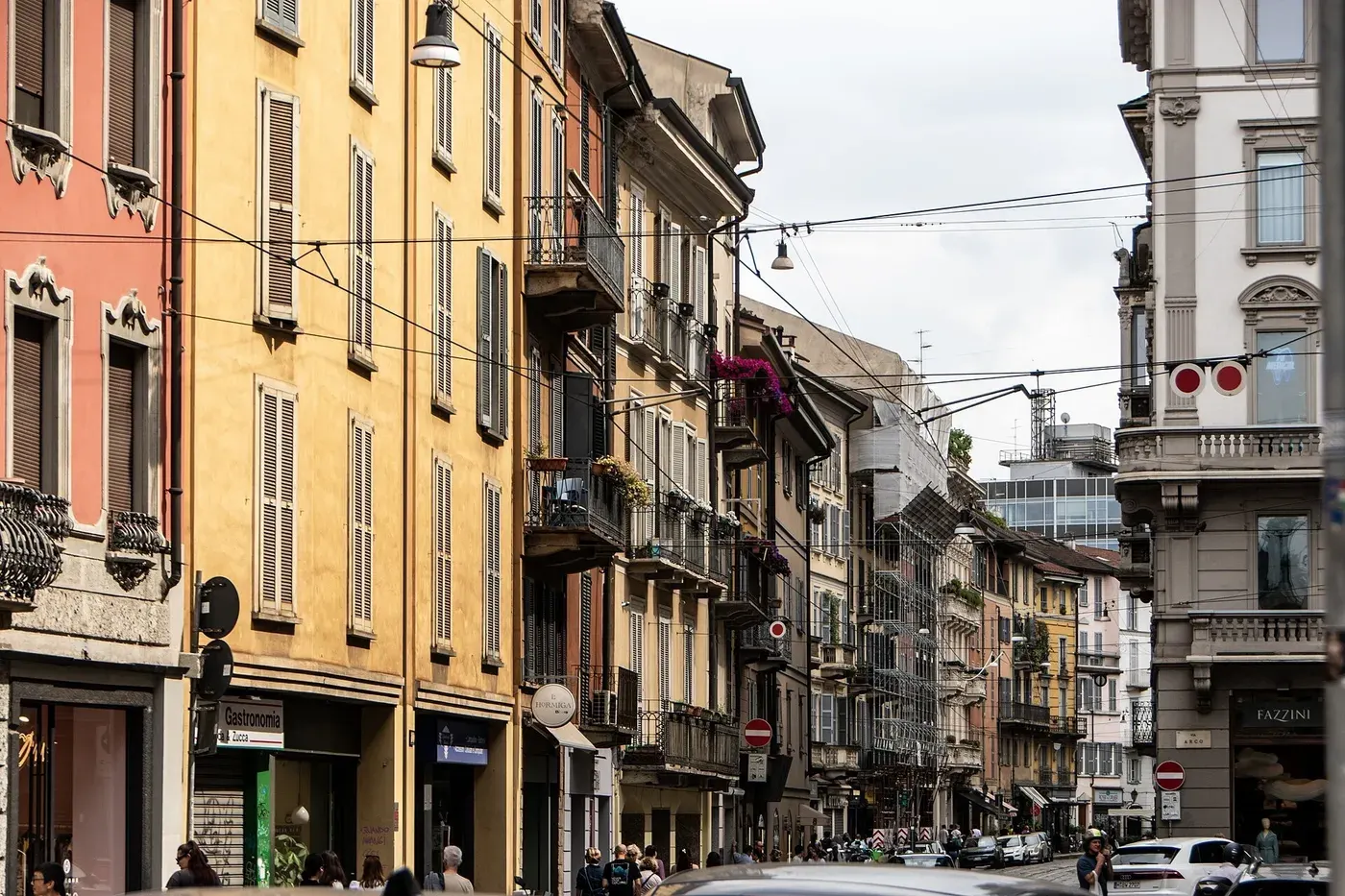
Second hand clothing wholesale Milan shops need from Campania works like any other order by weight: you describe category, tier, season and sizes, and Recycling Italy replies with a written offer. The goods then travel by road from Marcianise to Lombardy. A precise brief saves a round of emails and keeps the lot close to what you wanted.
Writing the brief for your shop
Four details do most of the work. Put them at the top of the first message, one line each, so the reply can answer them one by one.
Category
Say which line you are buying: women's, men's or children's clothing, or a mixed lot. If you also stock shoes, toys or household goods, mention them as separate lines. Each category is described and sold on its own, and the clothing page shows how the main one is presented.
Tier
The tier names a quality level, for example cream. The exact tier and contents are confirmed in the written offer, so if you are not sure what to pick for a city shop, say how your customers shop and ask for advice. The guide to sorting grades is a good thing to read before you decide.
Season
Lombardy has a real winter and a real summer, and a shop that restocks in the wrong month ends up with heavy coats in July. Name the season you are buying for and when you plan to have the goods on the rail.
Sizes
List the size range that sells in your neighbourhood and the share you want for children, if any. A lot is described by type and weight, and the offer states what can be said about sizes. Used goods will never match a size chart exactly, so a buyer who needs a narrow range should say so early.
Wholesale used clothing Lombardy: transport by road from Marcianise
The goods go by road from Marcianise, in the province of Caserta, to the address you give. Delivery terms and costs are arranged per order, and no day count or time slot is promised here. What you can settle in advance is who books the carrier, where the lorry can unload and who signs for the goods.
The main road link is the A1. According to the Italian Wikipedia article, the A1, also called Autostrada del Sole or Milano-Napoli, starts in Milan, runs through Lombardy, Emilia-Romagna, Tuscany, Umbria and Lazio, enters Campania and ends in Naples. It describes the A1 as the main north-south axis of the Italian motorway network, and the article on Marcianise places a junction, Caserta Sud, at the south of the town.
City shops often have a small storeroom and limited loading access. If that is your case, tell the seller in the first message, because the way the goods are packed and the size of the vehicle depend on it. A shop with a shared loading bay should add the contact point there.
Milan's traffic zones and your loading bay
Milan restricts traffic in parts of the city. A motoring guide published on 5 February 2026 describes Area B as a limited-traffic zone covering most of Milan, active Monday to Friday from 7.30 to 19.30, with entry free of an access ticket but subject to vehicle rules. It also refers to a separate central zone, Area C.
These rules change often, and the Comune di Milano publishes the current ones. For your order the practical point is that a shop inside a zone should tell the seller the street, the width of the access, the hours when unloading is easiest and whether a smaller vehicle is needed. Do not assume that a lorry that suits a warehouse can reach a shop door.
Second hand clothing wholesale Milan: from offer to confirmation
The written offer states category, tier and weight. When you accept, the order is confirmed by email or by pro forma invoice, and payment terms are agreed in writing. Ask what the smallest order is for your line, because it depends on the product type and the offer will state it. Used clothes by the kilo for Milan shops are therefore bought on documents, not on a handshake.
Before accepting, you can ask for photos or a short video of your lot. Photos and descriptions are indicative only, since each lot differs. Known brands can appear in a mixed lot but are not promised, a point covered in the article on branded lots sold by the kilo.
Invoicing inside Italy: e-invoices and VAT
For two Italian businesses, the invoice is electronic. The Ministry of Economy and Finance says that from 1 January 2019 electronic invoicing became mandatory for transactions between private parties, that the invoice is sent to the customer through the Sistema di Interscambio of the Agenzia delle Entrate, and that it takes the form of an XML file. It attributes the obligation to the 2018 Budget Law.
An explainer published in 2018 adds that when the system cannot deliver an invoice, it makes it available in the buyer's reserved area on the Agenzia's website. So give the seller the electronic address your business has registered for invoices, and check that area if an invoice seems to be missing.
The Italian VAT rules themselves are in transition. Legislative Decree 10 of 19 January 2026 adopted a consolidated VAT act, and a tax commentary says its provisions apply from 1 January 2027, when the corresponding rules in Presidential Decree 633/1972 are repealed. Ask your accountant which text governs the invoice you will receive.
The margin scheme in used-goods trade
The EU VAT Directive 2006/112/EC has a special scheme for second-hand goods. Article 311 defines second-hand goods as movable tangible property suitable for further use as it is or after repair, and Article 313 requires Member States to apply a scheme that taxes the profit margin of taxable dealers.
Article 325 says that a dealer applying the margin scheme may not show the VAT on those supplies separately on the invoice, and Article 226 requires the mention "Margin scheme - Second-hand goods" on the invoice.
So, when you compare two offers, look at how the invoice will be built: whether VAT appears as a separate line or the margin-scheme mention appears instead. Ask the seller in writing which treatment applies to your order, and ask your accountant what it means for your own VAT.
Used goods in Italy: what a shop owner should know
Italian public-security law has had a long-standing rule for trade in used things. Article 126 of the Consolidated Law on Public Security, which dealt with prior declaration for trade in antique or used things, has been repealed by Legislative Decree 222 of 25 November 2016.
Article 128 of the same law remains in the text published by Brocardi, updated on 25 April 2026, and requires a register of daily operations on such things, with counterparties identified by a photo ID and the register shown to the police on request.
Whether and how article 128 applies to a shop that sells used clothing is for the local one-stop business office, the SUAP, or the Chamber of Commerce to confirm. Ask them when you set up, not after your first sale.
A brief in one table
The details above fit in a short message. This is the shape that gets a precise answer, with the type of wording each line can carry.
| Line of the brief | What to write |
|---|---|
| Shop and place | Type of shop, town in Lombardy, street access for a delivery vehicle |
| Category | Women's, men's, children's or mixed, plus any other category |
| Tier | The tier you have in mind, or a request for advice |
| Season and timing | The season, and when the goods should be on the rail |
| Sizes | Range that sells, share for children |
| Weight | A rough estimate for a first order |
| Invoicing | Your registered electronic address and who receives the paperwork |
If a point is not known yet, say so in the message instead of leaving it out. A supplier can work with an honest gap, and cannot work with a silence that hides it.
Spreading the order over the season
A shop with limited floor space does not have to take the whole season in one lot. You can plan a sequence: a first order for the opening weeks, a second once you know which tier and which sizes moved, and a third to fill the gaps. Each order is a separate offer, so you can change the category or the tier between them.
The trade-off is paperwork and transport arranged more than once, and the terms for each delivery are agreed per order. Many shops accept that in exchange for a rail that never looks empty and a storeroom that never overflows. Decide which of the two problems you prefer before writing the brief, and say it in the message.
What to check when the lot arrives
Have the offer printed or open on a screen while the goods are unloaded. Check the number of bales or bags against the paperwork, then open a few and compare their contents with the category and tier written in the offer. Take photos before you move anything to the shelves.
Italian civil law is blunt about the moment of delivery. Under article 1693 of the Civil Code the carrier is responsible for loss and damage from the time it receives the goods to the time it hands them to the consignee, unless it proves a listed cause.
Article 1698 adds that receiving the goods without reservations and paying what is due extinguishes the contract actions, except in cases of the carrier's fraud or gross negligence, while actions for partial loss or damage not recognisable at delivery survive if reported within eight days of receipt.
In practice, note any visible damage on the carrier's paper when you sign, and report hidden damage quickly. If something does not match the offer, complain in writing after delivery and attach the photos. Returns are possible only if they were agreed in advance. A clear record on your side also helps with the next order.
A first order for a Milan shop
A shop that has never bought used stock in bulk should keep the first order modest and the brief narrow: one category, one tier, one season. Watch how the lot sells over a few weeks, then adjust. The beginner article on buying second hand clothing wholesale walks through the steps in order, and the notes on choosing a supplier help you compare offers.
When the brief is ready, send it through the contact form or to [email protected], and mention that you are in Milan or elsewhere in Lombardy.
Frequently asked questions
What should a Milan shop write in its first enquiry?
Write the category, the tier you want or a request for advice, the season, the size range and an approximate weight. Add whether you have a storeroom and loading access. With those points the written offer can be specific.
Will I receive an electronic invoice?
Between Italian businesses, invoices go through the Sistema di Interscambio as XML files, an obligation for private transactions since 1 January 2019. Give the seller your registered electronic address and ask your accountant how VAT will appear on the invoice.
Can I order only children's clothing?
Name the line in your enquiry. Lots are sold by category and tier, and the offer states what can be supplied for the line you ask. Sizes and styles vary by lot, so the description remains indicative.
Who signs for the delivery at my shop?
This is part of what you arrange per order. Ask who books the carrier, where it can unload and who receives the goods, and keep the answer in the offer or the pro forma invoice so nobody has to guess on the day.
What if the lot differs from the offer?
Tell the seller in writing after delivery and attach photos taken before you moved the goods. Returns are possible only if they were agreed in advance, so clear any doubt about the contents before you confirm.