Which second hand clothing categories to buy for a shop or stall
By the Recycling Italy team
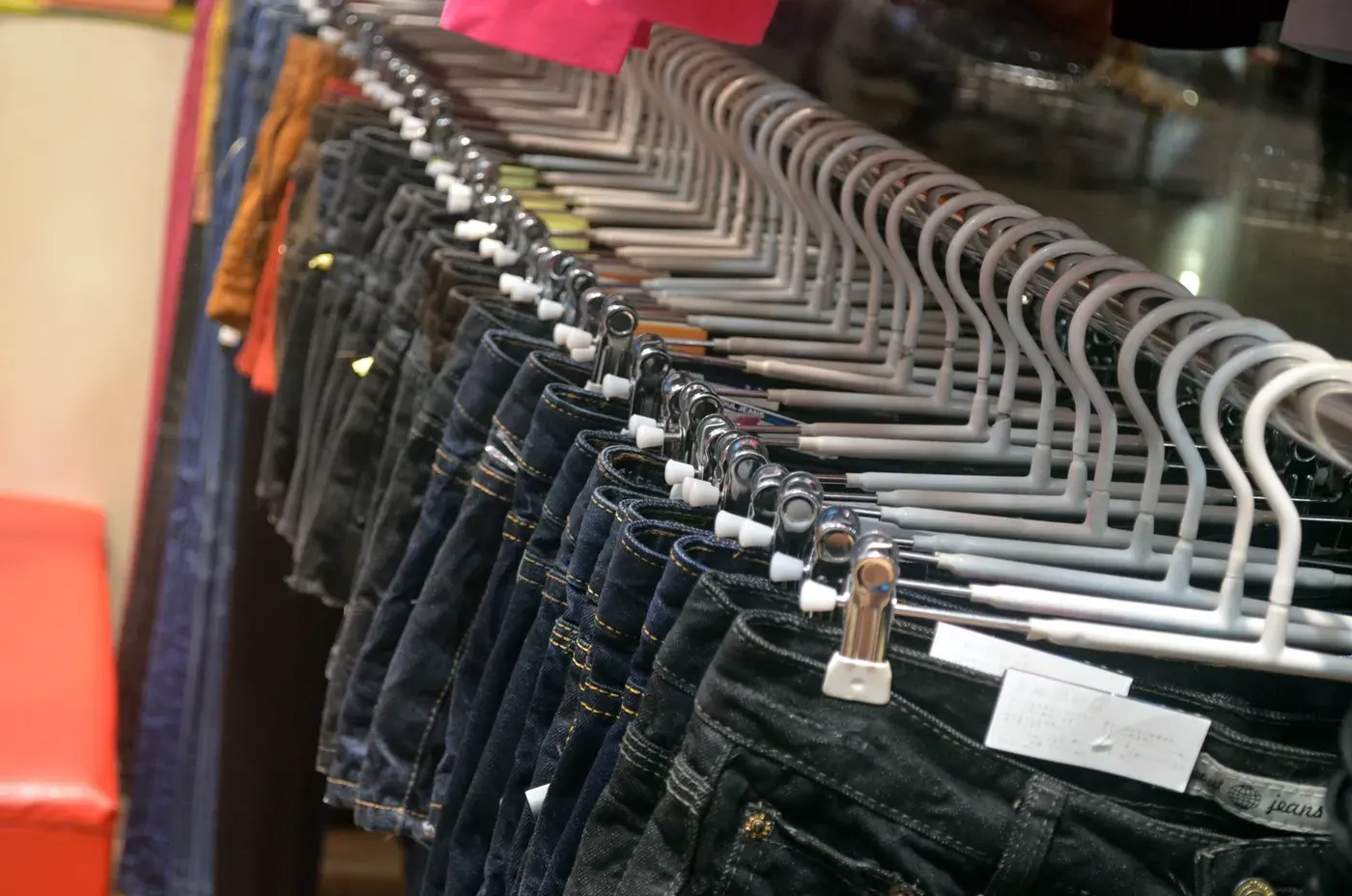
To decide which second hand clothing categories to buy, start from your customers, the season and your floor space, not from a product list. Order one mixed lot, see what leaves the rail and what stays, then narrow the next order to the categories that moved. This guide adds the trade side: grades, tariff codes and labels.
Start with the people who walk in
A shop near a school sees different shoppers from a stall at a weekend market. Write down who your customers are in a few lines: families with children, young people who like vintage, workers who need sturdy jackets, older buyers looking for basics. Each group points to a different part of the offer.
Put that description into your first enquiry, because it tells the supplier what the lot is for. Do not copy another shop's shelves. A rail that works in a city centre may sit untouched in a village, and the only way to find out is to listen to the questions your own customers ask at the till.
How the trade itself cuts the categories
You are not the first to split used clothing into groups, and the trade has done it for a long time. A booklet written by Waag for the EU-funded Reflow project (2021) describes how collected textiles are sorted: reusable items go into more than 200 categories that reflect what the final customers need, and into at least three quality grades called crème, first quality and second quality.
The same booklet says the destinations differ by grade. Crème pieces go to second hand and vintage shops in Western Europe, first quality goes mainly to Eastern Europe and second quality mostly to Africa and Asia. It also notes that the first-quality piles lean towards winter clothing, jackets and workwear, while the second-quality piles are mainly summer clothing, sports clothing and trousers.
Two lessons follow for a buyer. A category name such as "women's tops" or "men's jackets" is a working label of the sorter, and the finer the label, the easier it is to match the lot to your customers. And a tier is a quality level, so a request that names both the category and the tier is more precise than one that names only one of them.
Which second hand clothing categories to buy by season
Season is the first filter, because used clothes lose their appeal when the weather changes. Knitwear, coats and boots belong to the cold months, and a shop should have them on the floor before the first cold week, not after it. Light dresses, shorts and sandals need to arrive early in spring.
The Waag booklet gives a useful warning from the supply side: winter clothing is usually collected in spring, while demand does not begin to rise until autumn, so goods often have to be stored for five to six months. For you, the practical point is to ask about cold-weather lots early and to read in the offer what is actually available.
Work backwards from your selling date. Subtract the time for the offer, for the delivery and for your own sorting, and order that far ahead. Mid-season items such as shirts, jeans and light jackets cover the gaps and let you sell all year.
The Sorting for Circularity Europe project by Fashion for Good and Circle Economy (2022) took its samples in two rounds, autumn and winter 2021 and spring and summer 2022, to account for seasonal changes in the types of garments entering sorting facilities. The same project found cotton to be the dominant fibre at 42 percent, with blends at 32 percent.
Sizes decide more than most buyers expect
A lot with lovely pieces in the wrong sizes is slow stock. Think about the sizes your customers actually buy and say so in the enquiry. Children's wear changes size fast, which means parents come back often, but it also means you need a spread of sizes, not a single one.
For adult clothing, ask whether the lot is mixed by size or sorted. A mixed lot is fine for a market stall that sells by the piece from a table, while a boutique with a tidy rail may want the sizes defined before it opens a bale.
What the customs code says about a used lot
Worn clothing in bulk has its own place in the tariff, apart from apparel in general. In the Harmonized System, as published in the UK Trade Tariff, chapters 61 and 62 cover articles of apparel, knitted or crocheted in chapter 61 and not knitted in chapter 62. The notes to both chapters exclude "worn clothing or other worn articles of heading 6309".
Note 3 to chapter 63 sets the conditions for heading 6309. It applies to clothing and clothing accessories, blankets, bed linen, table linen, toilet linen and kitchen linen, furnishing articles, and footwear and headgear. Two conditions apply together: the articles must show signs of appreciable wear and be presented in bulk or in bales, sacks or similar packings.
In the EU, the European Environment Agency notes in its 2023 briefing on used textile exports, worn textiles and clothing are reported under Combined Nomenclature code 6309.
| Product family | Heading for apparel in general | Heading for a worn lot in bales or sacks |
|---|---|---|
| T-shirts and vests, knitted | 6109 | 6309 |
| Jerseys, pullovers, cardigans, knitted | 6110 | 6309 |
| Men's shirts | 6205 | 6309 |
| Women's dresses, skirts, trousers (not knitted) | 6204 | 6309 |
| Babies' garments, knitted | 6111 | 6309 |
| Footwear with leather uppers | 6403 | 6309 |
Classification matters because the heading drives duty, statistics and how authorities see the goods. The same EEA briefing says that textiles under 6309 are rarely considered waste, while rags and scraps under code 6310 might be. The rule says what it says; how it applies to your shipment is a question for your customs agent or adviser, not for a blog.
Labels on used garments: what to expect
Buyers often ask whether every garment must carry a fibre label. Regulation (EU) No 1007/2011 requires textile products to be labelled with their fibre composition when made available on the market, and it applies to products with at least 80 percent textile fibres by weight.
Annex V of the same regulation lists products that need no fibre label, and item 13 reads "Old made-up textile products, where explicitly stated to be such".
The European Commission's own FAQ on the regulation addresses second hand clothes with cut-out labels. It says that where the fibre composition cannot be established, consumers have to be explicitly informed that they are buying "old made-up textile products". The FAQ states that it is not legally binding, so treat it as guidance and not as a ruling.
Two practical points come out of this. First, a shop that sells used garments should say so clearly on the shelf or the price tag. Second, other lines have their own rules: Annex V also exempts toys and the textile parts of footwear, although the Commission FAQ adds that the Footwear Directive (94/11/EC) still requires the main components of footwear to be labelled.
What to check in each category
When the lot is described by category, a short checklist saves arguments later. These are the points a reseller can use on the first delivery, with the family of goods in mind.
- Tops and T-shirts: collars, underarms and print condition, because stretched collars and cracked prints are what customers notice first.
- Jeans and trousers: waistbands, hems and knees, and whether the sizes match the label.
- Coats and jackets: zips, linings and pockets, which fail before the fabric does.
- Knitwear: pilling and moth damage, checked by holding the piece against the light.
- Children's wear: fastenings, drawstrings and small parts, plus a sensible spread of ages.
- Dresses and skirts: seams and linings, and whether the length suits the season you are selling for.
Write the same list into your own shelf routine. A category that fails the same check twice in a row is a category to renegotiate or drop.
Beyond clothing: shoes, toys and household goods
Clothing is the main line for many resellers, but it is not the only one. Shoes bring customers who come only for footwear and then browse the rest. Toys suit shops with a family trade, and bric-a-brac such as curtains, table linen and bedding fills a corner that clothing cannot.
Each has its own handling. Shoes need pairs matched on the shelf, toys need a quick check that they are complete, and household textiles need space to be displayed. Add a second line only when the first one runs smoothly, and say plainly in the enquiry which line is the new one. The article on second hand shoes wholesale covers footwear in detail.
Begin with a mixed lot, then narrow
A mixed lot spreads the risk when you do not yet know your customers. Keep a simple note for the first few weeks: which pieces sold, in which sizes, and how long the rest stayed on the rail. Photograph the shelves each week if it helps you remember.
At the second order, use those notes to name categories more precisely. A buyer who writes "women's tops and jeans, spring, adult sizes" gets a more exact offer than one who writes "clothes". The clothing catalog page lists the groups you can name, and the guide to sorting grades explains how the tiers fit in.
Fit the order to your space and your cash
Buying second hand clothes for resale ties up money in goods that are not yet sold, so size the order to the rail you have and the weeks you can wait. A full lot that sits in boxes in the back is not stock, it is a cost.
It is better to repeat a smaller order than to carry one that is too large. If a lot proves slow, order a different mix next time. If it sells fast, order more of it. Both choices rest on your notes, not on a feeling.
Be honest about what you can sort and price in a week. A reseller who has to label several hundred pieces by hand will cope with a narrow lot far better than with a broad one, and a narrow lot is easier to describe to a supplier, too.
Write the request around categories and tier
Choosing used clothing categories is only half the task; the other half is saying how you want the lot sorted. Name the tier as well, remembering that a tier names a quality level and the exact one is confirmed in the written offer. Lots are sold by weight, so say how much room you have.
The first-order guide walks through the steps after that. Your next step is to list three categories and your sizes in a message through the contact form.
Frequently asked questions
Should a small shop start with one category or several?
One category gives you clean information, while several spread the risk. A small shop usually does best with one main line plus a modest mixed lot, and then adjusts after a few weeks of notes on what sold and in which sizes.
How do I know which sizes to ask for?
Look at what your customers already ask for and what you cannot supply. Write the size groups in the enquiry in plain words, such as adult small to large or children up to a certain age. The offer can then describe the lot against them.
Can I change categories from one order to the next?
Yes. Every order is a separate offer, so you can change the category, the tier or the mix as your notes show what sells. Say what changed and why, so the new offer is written for the new lot.
Does the season I order for affect the offer?
Season affects which lots make sense for you, and you should state it in the request. The written offer then describes the lot you are being offered, and you can check whether it fits the weeks in which you plan to sell it.
Does a used garment need a fibre composition label?
Regulation (EU) No 1007/2011 lists old made-up textile products in Annex V, where explicitly stated to be such, among items that need no fibre label. The Commission's FAQ says consumers must be told they are buying such products. Confirm how it applies to your shop with an adviser.
Is used clothing classified differently from new clothing?
In the Harmonized System, worn clothing presented in bulk or in bales and showing appreciable wear falls under heading 6309, while apparel in general sits in chapters 61 and 62. How the rule applies to a given shipment is a question for your customs agent.