Quality check of a second hand wholesale lot: what to do on delivery day
By the Recycling Italy team
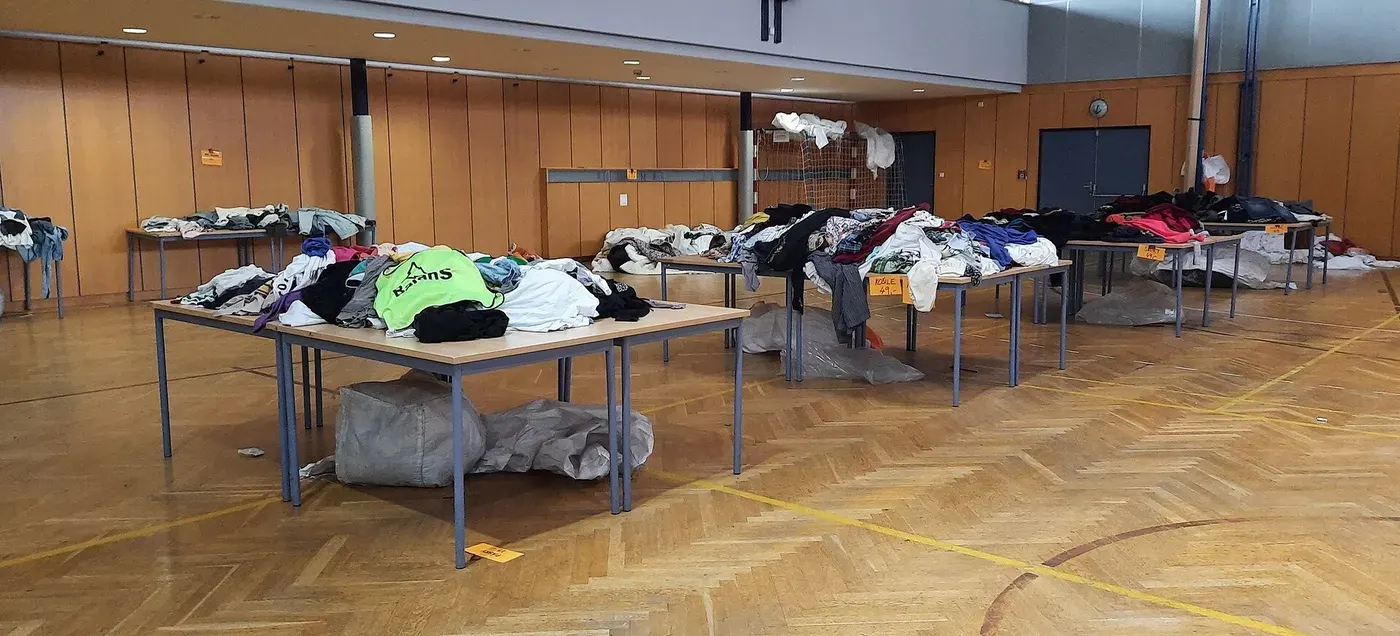
A quality check of a second hand wholesale lot starts at the tailgate, not on the sorting table. Compare units and papers with the offer, weigh what you can, open a sample from several categories, photograph anything that differs and put it in writing in time. Each step has a reason, and some have a legal clock.
Before the truck arrives
A lot of problems are really preparation problems. Print or open the written offer and the order confirmation, so that the description is in front of you when you count. Clear a table, find a scale that can take a whole unit, and charge the camera or mobile you will use for photographs.
Think about people too. Whoever signs for the delivery should know what to check and have the authority to write a reservation on the transport paper. A driver will not wait long, and a signature given in a hurry is hard to take back.
At the tailgate: packages, condition, papers
Count the units against the consignment note and look at the outside. Torn wrapping, wet patches, crushed cartons, a pallet that has shifted and missing units are the visible signs. If the goods cross a border by road, the CMR Convention governs the carriage, and Article 8 says the carrier checks the number of packages, their marks and numbers and the apparent condition of the goods and packaging when taking them over.
Article 30 is the one that matters to the receiver.
If the consignee takes delivery without duly checking the condition with the carrier, or without sending reservations that give a general indication of the loss or damage, taking delivery is prima facie evidence that the goods arrived in the condition described in the consignment note.
For apparent loss or damage the reservations are due not later than the time of delivery. For loss or damage that is not apparent, they are due in writing within seven days of delivery, Sundays and public holidays excepted.
When the consignee and the carrier have checked the goods together, the text says that evidence against the result is admissible only for non-apparent loss or damage, and only if written reservations reach the carrier within the same seven days from the date of checking. The date of delivery itself is not counted.
Delay is treated separately: no compensation for delay unless a written reservation is sent within twenty-one days of the goods being placed at the consignee's disposal.
The practical lesson: write what you see on the delivery document before the driver leaves, and then check inside the units within the days that follow. A note that says only "goods received" gives you nothing to build on. If you are unsure how the Convention applies to your shipment, ask your carrier or adviser.
Two clocks that run side by side
The carrier's clock and the seller's clock are different, and both start at delivery or discovery. The table sets out what each text says, so you can see why a quick routine pays. Which law governs your order depends on the contract and on where the parties have their places of business, and the written offer is the first place to look.
| Rule | Who it concerns | What it says | Time limit |
|---|---|---|---|
| CMR Convention, Article 30 | Receiver and carrier | Reservations about loss or damage, in writing when not apparent | At delivery if apparent; seven days, Sundays and public holidays excepted, if not apparent |
| Italian Civil Code, Article 1495 | Buyer and seller | Notice of defects to the seller, unless the parties or the law set another term | Eight days from discovery; the action lapses one year from delivery |
| CISG, Articles 38 and 39 | Buyer and seller in different Contracting States | Examine the goods promptly; give notice specifying the lack of conformity | As short a period as practicable to examine; reasonable time to notify; two years at the outside |
What the Italian Civil Code says about notice of defects
Under Article 1495 of the Italian Civil Code, the buyer loses the right to rely on the seller's liability for defects if the defects are not reported to the seller within eight days of discovery, unless the parties or the law fix a different term. The notice is not needed if the seller has acknowledged the defect or concealed it. The action lapses, in any case, one year after delivery.
That text is short, so do not read more into it than it says. Eight days from discovery is not eight days from the truck, and a longer or shorter term may have been agreed in the offer. If the offer sets a complaint period, treat it as the working deadline, since it is the one you have actually accepted.
International sales and the Vienna Convention
For a buyer in another country the United Nations Convention on Contracts for the International Sale of Goods, known as the CISG, may apply. Article 1 says it covers sales between parties whose places of business are in different States when those States are Contracting States, and Article 6 allows the parties to exclude it.
Article 38 asks the buyer to examine the goods within as short a period as is practicable in the circumstances; when the contract involves carriage, the examination may be deferred until the goods arrive.
Article 39 then says the buyer loses the right to rely on a lack of conformity if it gives no notice specifying the nature of the lack within a reasonable time after discovering it, or after it ought to have. In any event, notice must come within two years of the goods being handed over, unless that limit is inconsistent with a contractual period. Read the contract, the offer and the law that applies; if in doubt, ask an adviser.
Weigh and count against the offer
Lots are sold by weight, so the scale is your first instrument. Weigh each unit, or a representative number of units, and compare the total with the weight on the offer and on the consignment note. The CMR note lists the gross weight, which normally includes packing, so allow for the difference between gross and net weight when you compare figures.
Count the units, then the categories if the offer lists them. Do not count every garment on the first day: a count of units, a weight and a careful look at a few of them tell you whether the delivery matches the description. A large gap between the weight on the offer and the weight on your scale is the clearest early warning, and it should go into your first message.
Quality check of a second hand wholesale lot: sampling the categories
Open a sample from several parts of the delivery, not only from the top of the first pallet. Take units from the front and back, from the top and bottom layers, and from every category named in the offer. What is easy to reach may not be typical of what lies underneath.
- Empty each sampled unit onto a clean table and look at the whole content, not a handful.
- Sort into three piles: ready for sale, needs cleaning or a minor repair, not usable.
- Check categories and sizes against the offer, and the tier against the description of the tier.
- Note stains, damage, odours and foreign items such as packaging scraps.
- Record the weight of the sample and of each pile.
A tier names a quality level, and the exact tier and contents are confirmed in the written offer. Compare what you see with that description, not with the lot you hoped for. Natural variation between lots is normal in a second hand trade, and photographs and descriptions are indicative.
Separate a defect from normal variation
Used goods show wear, and the offer describes the lot and the tier you ordered. Before you report, ask one question of each finding: did the offer describe this, or does it differ from the offer? A faded T-shirt in a lot described as used is not a finding, while a category missing from a lot that lists it is one.
Keep the two groups on separate lines in your message. A short list of real differences gets attention, while a long list that mixes them with ordinary wear is easier to set aside. Lots vary in weight, condition and style, and photographs shown before the order are indicative, so lean on the written description.
Handle used goods with basic hygiene
Used clothing carries dust, and the people who sort it for a living notice. A poster presented at the German Allergy Congress in 2019, reported by the allergy foundation ECARF, described a used-clothing sorting workplace in Germany where the average house dust mite level was more than 50 times higher than in a normal household and the cat allergen load was five times higher than in households with cats.
It was a single workplace, so treat it as a signal and not as a rule.
The sensible response is simple. Open units in a ventilated space, avoid shaking garments out near other stock or customers, wear gloves if you have sensitive skin and wash your hands before you eat or touch your face. Staff with asthma or known allergies should be told what the task involves. Whether and how you launder items before sale is your own decision as a reseller.
Photographs and records that help later
Take photographs as you go, because they cost nothing and cannot be recreated afterwards. A few angles cover most situations.
- The pallet and the outside of the units on arrival, with the delivery document visible.
- Any damage to the packaging, close up and from further back.
- The scale display for each unit you weigh.
- Each sample pile, and individual items that differ from the description.
- Labels, tags or other marks that identify the item, where relevant.
Store the files with the date in the name and keep the delivery papers together with them. Write a short log: who opened what, when, what was found. A clear record is also the basis for your own stock planning, because it tells you how the supplier's descriptions translate into what you get on the rail.
How to document a complaint in writing
If the check shows a difference, write to the supplier by email as soon as you have enough to be specific, and well inside any period stated in the offer.
A wholesale order complaint process works best when the message is short and factual: it names the order, the delivery date, what was checked and what differs from the offer, and it attaches the photographs and the scale readings. State what you are asking for, such as an adjustment or a review of the lot.
Keep the tone neutral and the facts separate from opinions. Complaints are made in writing after delivery, and goods go back only if the return was agreed in advance, so do not send a lot back without a written agreement. Keep the units you complain about as they are, in their packaging if possible, until the supplier has replied.
Next step
Put the checklist on one page and give it to whoever signs for the next delivery. If you want to understand how lots are described before they arrive, the article on sorting grades and the buying guide come first, and the page on choosing a supplier covers the questions to ask early. Questions about a specific order can go through the contact form.
Frequently asked questions
How long do I have to report a problem with a lot?
It depends on the offer, the transport rules and the law that governs the sale. The CMR Convention sets seven days, Sundays and public holidays excepted, for damage that is not apparent, and, where Italian law applies, the Italian Civil Code sets eight days from discovery. Check the written offer first.
Should I write on the delivery document even if I have not opened the units?
Yes, if you can see a problem: torn wrapping, wet patches, crushed cartons or missing units. A reservation giving a general indication of the loss or damage, made at delivery, protects your position better than a signature with no comment.
How many units should I open as a sample?
There is no fixed number. Open enough units from different positions and from every category in the offer to see the spread, and open more if the first ones differ from the description. Record what you opened and where it came from.
Which photographs are most useful for a complaint?
Photographs of the outside of the delivery with the document visible, the scale display for each unit weighed, damage to the packaging and each item that differs from the description. Store them with the date and keep the delivery papers beside them.
What if the weight on my scale differs from the offer?
Weigh again, allow for the difference between gross and net weight, and compare with the consignment note. If a gap remains, send the supplier a short written message with the readings and photographs of the scale, and state what you are asking for.
Do I need special precautions when I handle used clothing?
Basic hygiene is enough for most buyers: a ventilated space, no shaking out near customers, gloves if your skin is sensitive and clean hands before eating. People with asthma or known allergies should take extra care, because used textiles carry dust.