Used Toys Wholesale for Resellers: Soft Toys, Plastic Toys and What to Ask First
By the Recycling Italy team
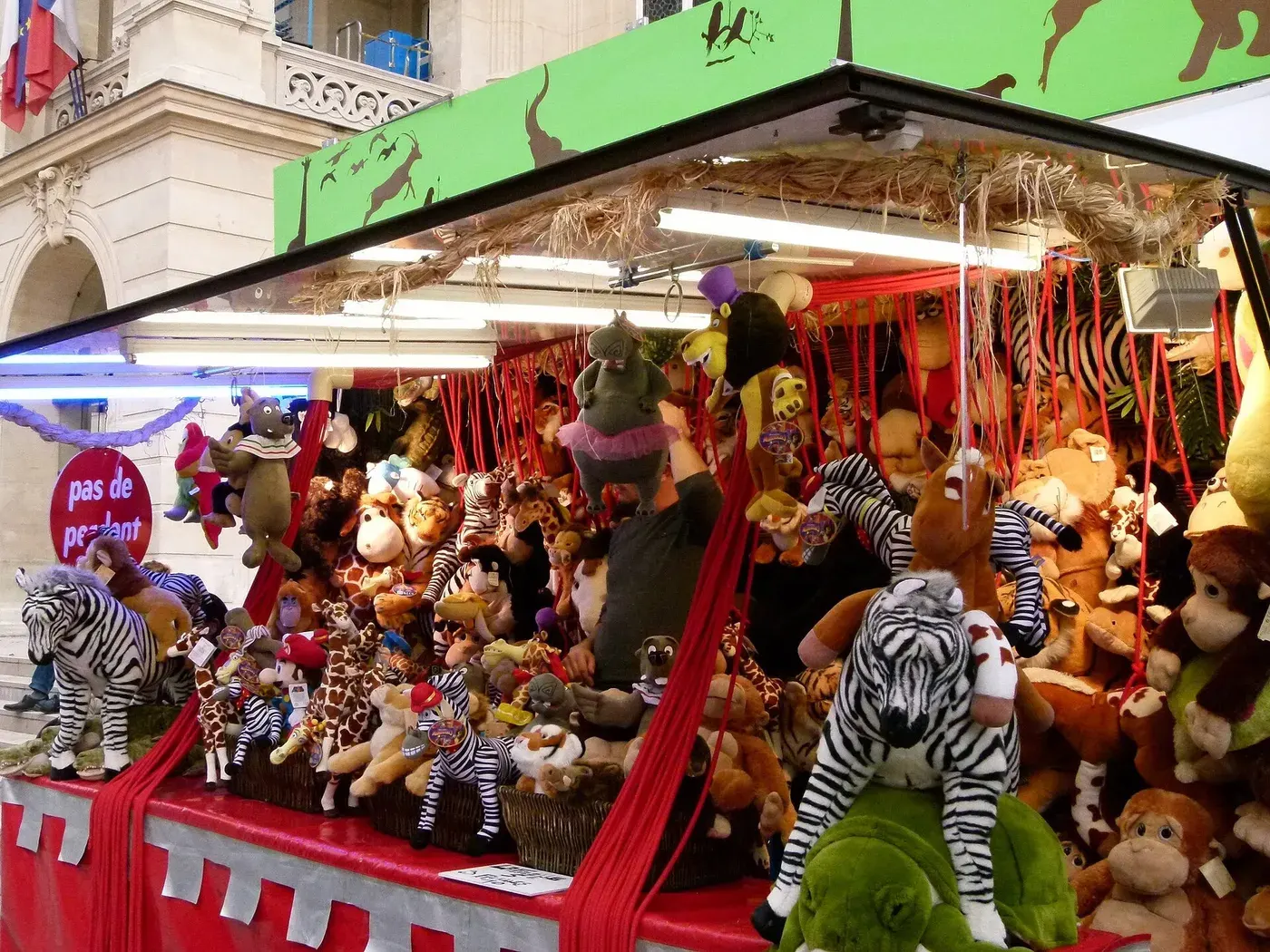
Used toys wholesale means buying second-hand toys in bulk, by weight, and reselling them piece by piece at a stall, in a shop or online. A lot can hold soft toys, hard plastic toys or a mix of both. Weight, condition and style change from lot to lot, and EU product rules shape what may safely go on your table.
Two different products under one name
Soft toys and plastic toys behave like two separate goods. Soft toys are light, so a given weight holds a great many pieces, and their value for you depends on cleanliness, smell and whether seams and eyes are intact. Plastic toys are heavier, hold fewer pieces per kilogram and arrive with more loose parts, from building bricks to vehicles and play sets.
Resellers who treat them as one category tend to overpay for one and underprice the other. A flea-market table fills quickly with light plush. A children's second-hand shop may care more about plastic ranges that can be washed and shelved.
What EU law counts as a toy
Directive 2009/48/EC, the Toy Safety Directive, applies under its Article 2(1) to products "designed or intended, whether or not exclusively, for use in play by children under the age of 14". Italy transposed it with Legislative Decree no. 54 of 11 April 2011, published in the Gazzetta Ufficiale no. 96 of 27 April 2011.
Annex I of the Directive lists products that are not considered toys. Among them are decorative objects for festivities and celebrations (item 1), puzzles with more than 500 pieces (item 8) and fashion accessories for children which are not for use in play (item 19). A mixed lot can therefore hold things that look like toys but sit under different rules, and the label on the carton does not settle which.
Placing on the market and second-hand toys
The Directive defines two terms that matter in resale. "Making available on the market" is any supply of a toy for distribution, consumption or use on the Community market in the course of a commercial activity. "Placing on the market" is the first making available of a toy on that market.
The Commission's Blue Guide on EU product rules (2022 edition) adds that each individual product can only be placed once on the Union market, and that used products already on the Union market are subject to free movement. It also says that harmonisation legislation reaches used and second-hand products imported from a third country when they enter the Union market for the first time.
For a buyer, the practical meaning is a question to put to your adviser. Toys already circulating in the EU and toys entering it from outside are different starting points, and the paperwork you need depends on which one you handle.
CE marking and what a distributor checks
The Commission's toy safety page says that all toys sold in the EU must carry a CE marking, the manufacturer's declaration that the toy meets the essential safety requirements. Article 17(1) of the Directive requires the marking to be affixed visibly, legibly and indelibly to the toy, to an affixed label or to the packaging.
Article 7(2) tells distributors what to verify before they make a toy available. The toy must bear the required conformity marking and come with the required documents, instructions and safety information in a language consumers easily understand, and the manufacturer and importer must have met their duties on identification and contact details.
Used toys rarely come with box, leaflet and papers. That gap is the reason to ask a supplier how toys are sorted and what is taken out, and to keep your own check on markings, instructions and condition at the point of resale.
General product safety and used goods
Regulation (EU) 2023/988, the General Product Safety Regulation, applies from 13 December 2024 under its Article 52. Under Article 2(1) it covers products placed or made available on the market, to the extent that no specific Union rule with the same objective regulates their safety. Where a specific rule exists, the Regulation applies only to the aspects and risks that rule does not cover.
Recital 16 says that the requirements should apply to second-hand products, or products repaired, reconditioned or recycled, that re-enter the supply chain in the course of a commercial activity. The exception is for products that a consumer cannot reasonably expect to meet state-of-the-art safety standards, such as products presented as needing repair, or collectors' items of historical significance.
Article 5 states the basic duty: economic operators shall place or make available on the market only safe products.
Article 12 adds that a distributor must verify that the manufacturer and the importer have met their obligations on identification and labelling, and must make sure that storage or transport does not jeopardise conformity with the general safety requirement. A distributor who has reason to believe a product does not conform must not make it available until it has been brought into conformity.
UK guidance reads the same idea in its own law. The Business Companion guide, updated in June 2026, says second-hand toys fall under the General Product Safety Regulations 2005, need not carry the CE or UKCA mark, but must still be safe. It adds that a second-hand toy with neither mark was probably not compliant when new, and that selling it is not advisable.
These texts say what the rules require of anyone who trades toys. How they apply to your shipment and your market is for your own adviser to confirm.
The new Toy Safety Regulation
The Commission's page reports that Regulation (EU) 2025/2509 was adopted on 26 November 2025 and repeals Directive 2009/48/EC. It enters into force on 1 January 2026 and applies from 1 August 2030, after a transition period of four and a half years, and every toy will need a digital product passport accessible through a data carrier.
Until the new date, the Directive stays the reference text. If you plan to resell for years, note that the documentation attached to toys will change shape during that time.
Second hand soft toys bulk: what to look at
Soft toys are judged with the hands and the nose. Ask whether the stuffing is dry, the fabric free of stains and the labels readable. Plush stored in a damp place shows it the moment a bale is opened, and a single damp piece can spoil the smell of the whole lot.
Annex II, Part V, point 1 of the Toy Safety Directive requires toys to be designed and manufactured to meet hygiene and cleanliness requirements, so as to avoid risk of infection, sickness or contamination. That is a requirement on the maker, not a description of a used piece, which is why cleaning stays your job.
Airing is the minimum, and many pieces need a wash, so check that your margin carries the labour before you commit to a large lot.
Look at the small parts as well. Annex II, Part I requires toys clearly intended for children under 36 months, and their components, to be sized so they cannot be swallowed or inhaled.
A loose eye or a torn seam on a baby's plush turns it from stock into a reject. Annex V, Part B gives the example warning "Not suitable for children under 36 months" for toys that might be dangerous to that age group, and a used piece that has lost its tag has also lost its warning.
Size matters for display. A lot dominated by very large plush is a poor fit for a small stall, while palm-sized animals sell well in boxes by the till. State what you resell, and what you do not want to receive.
Wholesale used plastic toys and the problem of parts
Plastic toys sell by completeness. A puzzle with missing pieces or a play set without its figures is hard to move, whatever the weight. When you ask for wholesale used plastic toys, say whether you accept incomplete items in a lower tier or want items that can be sold as they are.
Battery toys need a separate line in the enquiry. Directive 2012/19/EU on waste electrical and electronic equipment defines such equipment as equipment "dependent on electric currents or electromagnetic fields in order to work properly", and its Annex I, which applied during the transitional period from 13 August 2012 to 14 August 2018, listed toys, leisure and sports equipment as category 7. Since 15 August 2018 the Directive covers all such equipment under the Annex III categories.
A toy with a motor or speaker is therefore also an end-of-life question for the reseller, so ask whether electronics are in the lot and whether they were tested or only packed.
Do not assume that a toy works because its casing is in good shape. Condition is indicative, and anything with a motor or a speaker should be treated accordingly until you have tried it.
Customs headings for toys
Toys sit in Chapter 95 of the Harmonised System, heading 9503. The UK Trade Tariff gives that heading as "Tricycles, scooters, pedal cars and similar wheeled toys; dolls' carriages; dolls; other toys; reduced-size ('scale') models and similar recreational models, working or not; puzzles of all kinds".
Note 3 of the chapter classifies parts and accessories suitable solely or mainly for such toys with them, and Note 5 excludes items identifiable as intended exclusively for animals, such as pet toys.
| Toy family in a lot | Tariff subheading in the UK Trade Tariff listing |
|---|---|
| Wheeled toys, scooters, dolls' carriages | 9503 00 10 |
| Dolls and their parts | 9503 00 21 |
| Construction sets | 9503 00 35 |
| Stuffed animals and creatures | 9503 00 41 |
| Puzzles | 9503 00 61 |
| Other toys incorporating a motor | 9503 00 75 |
| Die-cast miniature models of metal | 9503 00 85 |
| Other toys, of plastics | 9503 00 95 |
The subheadings are split by type of toy and by material, not by new or used. The same chapter excludes children's bicycles, which go under heading 8712, so a bicycle in a mixed shipment is a separate line. Confirm the exact code for your shipment with your customs agent.
What is checked before packing, and what is up to you
Toys are sold by type and by the quality level named in the offer. Ask what, if anything, is taken out first: broken pieces, items with sharp edges, anything unclean or damp. A supplier who can say what leaves the lot before packing is easier to work with than one who only promises a good lot.
- Which tier the lot belongs to, and what the tier contains.
- Whether soft and plastic toys are packed separately.
- Whether electronic toys are included, and whether they were tested.
- How incomplete sets and puzzles are handled.
- Whether photos or a short video of your lot can be sent before you confirm.
After arrival the work is yours. Sort the delivery into what sells at once, what needs washing and what goes to the reject pile, and weigh each pile. Three weights tell you more about a lot than any description, and they give you a basis for adjusting the mix next time.
How lots are sold and confirmed
Lots are sold by weight, per kg, and the tier and contents of each lot are confirmed in the written offer. The minimum order depends on the product type and is confirmed there too. For the range, see the used toys catalog, and for how tiers are named in clothing, the explanation of sorting grades shows the logic.
Photos and descriptions of lots are indicative only. Before you confirm an order you can ask for photos or a short video of your lot. That is especially useful with toys, where a picture of a pile says nothing about smell or missing parts.
Combining toys with other categories
Many buyers do not stop at toys. A stall that sells children's goods often adds clothing, shoes or small household items, and deliveries go by road from Marcianise. Sorting and packing of each category are separate, so list them separately in your enquiry.
The next step
Write through the contact form or to [email protected]. Name the type of toys, the share of soft and plastic that suits your sales, the country you ship to and how you resell. A clear brief gets you an offer that matches your shelf.
Frequently asked questions
Can I order soft toys only, without plastic ones?
Yes, you can ask for one type and name it in the enquiry. The contents of the lot, the tier and the weight are confirmed in the written offer, so describe what you resell and what you want left out, then check the offer line by line.
Does a used toy need a CE marking to be resold in the EU?
The Toy Safety Directive requires the CE marking on toys, and the Blue Guide says each product is placed on the market only once. How that applies to a used lot depends on where it came from and where it is sold, so confirm it with your adviser before buying.
Are used toys tested before they are packed?
Lots are sold by type and tier, but condition remains indicative and varies by lot. Do not assume that electronic toys work. Ask directly whether batteries and electronics are included and whether they were tested or packed as found.
Do the toys come with all their parts?
Completeness varies. Soft toys have no parts to lose, but puzzles, play sets and building sets can arrive incomplete. If you resell on completeness, say so in the enquiry and ask how incomplete items are handled in the tier you choose.
Which customs heading covers toys?
Toys fall under heading 9503 of the Harmonised System, with separate subheadings for dolls, stuffed animals, puzzles, construction sets and others. The subheadings do not split new from used. Your customs agent confirms the full code for your shipment.
How do I judge a lot before I confirm the order?
Ask for photos or a short video of the lot, and read the written offer for the tier, the type of toys and the approximate weight. Photos are indicative only, so use them to judge size, cleanliness and mix rather than exact pieces.