Used Baby Clothes Wholesale: How to Specify Sizes, Seasons and Condition
By the Recycling Italy team
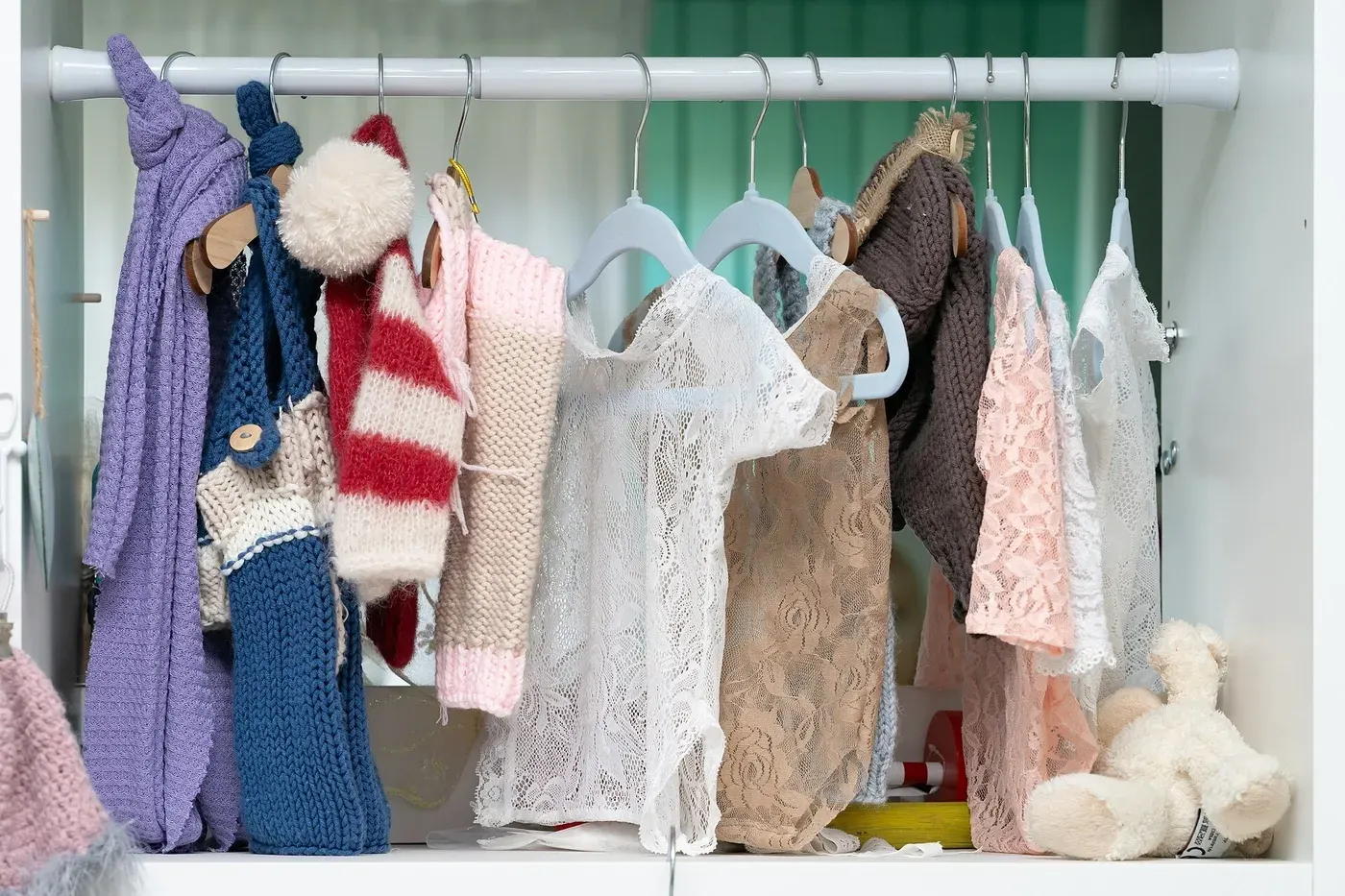
Used baby clothes wholesale is the bulk purchase, by weight, of second-hand clothing for babies and small children, sold on to families through shops, stalls and online. Children outgrow garments quickly, so much of what reaches the trade is lightly worn. What changes the outcome for you is how well the lot matches your customers' sizes and the season.
Used baby clothes wholesale starts with the question of size
A lot of children's clothing can be made of any size, and this is the biggest risk in the category. Baby sizes move in short steps, from newborn to toddler, then the labelling often switches to age brackets for older children. A shop that sells mostly to new parents needs the small end, while a stall near a school needs the larger end.
Write the range you want in the enquiry, and say which sizes you do not want. Weight, condition and style vary by lot, and the exact sizes in your lot will be an approximation of your request, not a list. If sizes are critical for you, ask how the lot is separated, and whether baby and older-child clothing can be supplied separately.
How the size on the label is meant to work
European standard EN 13402, Size designation of clothes, is built on the body, not the garment. The British Standards Institution describes its part 2 as a system in which "the size designation system is based on body and not on garment measurements", and part 3 covers body measurements and intervals for infants, boys and girls as well as men and women.
For a reseller this means that a label should name the body the garment is made for. Labels that show a height in centimetres, an age in months or both are common on children's lines, and they do not always agree with each other. When you compare two lots, compare what the labels actually say, not the age you assume.
Customs tariffs use a hard line. In the UK Trade Tariff notes to chapters 61 and 62, babies' garments and clothing accessories are articles for young children of a body height not exceeding 86 cm.
Heading 6111 covers such garments when knitted or crocheted, and heading 6209 when not. A chapter note excludes worn clothing of heading 6309 from both chapters, which is the heading for worn clothing, so the baby definition applies to new garments. Confirm the code for your own lot with your customs agent.
| Item | What the tariff text says |
|---|---|
| Babies' garments, knitted or crocheted | Heading 6111 |
| Babies' garments, not knitted | Heading 6209 |
| Definition of a baby garment | Young children of a body height not exceeding 86 cm |
| Worn clothing and other worn articles | Heading 6309, excluded from chapters 61 and 62 |
Second hand children clothes bulk: seasons
Lots follow the calendar. Summer lots hold bodysuits, shorts, light dresses and t-shirts, while winter lots hold knitwear, trousers, jackets and thick pyjamas. Ordering out of season is a normal tactic for a reseller with storage space, because families begin shopping for the next season before the weather turns.
Between seasons, mixed lots help a stall that sells all year. If you need a specific mix, such as half summer and half winter, say so. Do not take for granted that a lot built in one month will carry the same proportions as the one before it.
A planning table for sizes and seasons
| Decision | Narrow lot | Wide lot |
|---|---|---|
| Sizes | Two or three adjacent sizes | Baby to older child |
| Season | One season | Mixed year-round |
| Sells fastest at | A shop with a defined customer | A stall with passing trade |
| Main risk | Running out of the size that sells | Sizes that stay on the table |
A narrow lot is easier to sell through and easier to compare between orders. A wide lot spreads the risk but needs more table space and a bigger sorting job on arrival. Neither is better in general, and the first order is the place to find which fits your sales.
Cords and drawstrings on children's clothes
One safety topic is specific to children's clothing. European standard EN 14682, Safety of children's clothing - Cords and drawstrings on children's clothing - Specifications, covers children's clothing up to the age of 14, including disguise costumes and ski apparel. The Commission's Decision 2011/196/EU of 29 March 2011 found the 2007 edition to meet the general safety requirement of Directive 2001/95/EC for the risks it covers.
The Decision explains why. The Commission had sent a mandate to CEN to address the risks of strangulation, injury and entrapment posed by cords and drawstrings on children's clothes, and national authorities had submitted more than 400 notifications for garments that did not comply with the standard. A testing body's bulletin reports that the 2014 edition was approved as a harmonised standard with effect from 24 August 2015.
On a table, the lesson is simple. Look at hoods, necks, waists and hems for cords, toggles and long loose ends, and decide what you do with garments that have them. Whether such a garment may be sold in your market is for you and your adviser to check against the standard and your national rules.
Chemical rules that mention clothing
Annex XVII to the REACH Regulation (EC) No 1907/2006 lists restrictions on chemicals in articles.
Entry 72, introduced by Commission Regulation (EU) 2018/1513 of 10 October 2018, says that clothing and related accessories, textiles other than clothing that touch the skin in a similar way, and footwear shall not be placed on the market after 1 November 2020 if they are for use by consumers and contain certain carcinogenic, mutagenic or reprotoxic substances above the limits in Appendix 12.
Paragraph 3 of the entry says that this restriction does not apply to a list of items, and point (c) of that list is second-hand clothing, related accessories, textiles other than clothing, or footwear. Used garments are therefore outside entry 72 as written.
Other entries are not worded the same way. Entry 43, on azocolourants, bans azodyes that may release listed aromatic amines above 30 mg/kg in textile and leather articles that may touch the skin directly and for long, and lists clothing, bedding, towels, nappies and sleeping bags among its examples.
Do not assume an exemption for used goods under entry 43: ask your adviser how the entry applies to a lot of used garments.
Product-safety law and children as a vulnerable group
Regulation (EU) 2023/988, the General Product Safety Regulation, tells those who assess a product to take into account the categories of consumers who use it. Article 6(1)(e) names children among the vulnerable consumers. Article 7(1)(a) gives a presumption of conformity to products that follow relevant European standards, which is why standards such as EN 14682 matter in practice.
Italy's Consumer Code, Legislative Decree 206/2005, carries the idea into national law. Its article 104, titled obligations and information of operators, opens by saying that they make sure the product conforms to the general safety obligation. The rule says what anyone in the trade must watch; how it applies to your shipment is for your adviser to confirm.
Fasteners, trims and small parts
Baby clothes carry more fasteners per kilogram than most categories: snaps, buttons, ribbon, appliques and sewn-on beads. On every delivery, run a thumb over each of these and pull gently. A button that moves, a patch that lifts or a bead that is loose is a reason to remove the piece or repair it before sale, because parents of small children will check it themselves.
The same quick pass catches broken zips, torn seams and elastic that no longer holds. Make it part of the sorting routine rather than a separate step, so that no garment reaches the table untouched by someone's hands.
Hygiene and condition: what resellers ask
Parents look at baby clothes more closely than any other garment. They smell them, turn them inside out and check the seams. Resellers who sell to them therefore ask about cleanliness: stains, odours, stretched elastic, worn knees, faded prints. These are questions about condition, not about health, and we make no health claims about used garments.
Ask how the lot is sorted, and which defects are removed before packing. The tier named in the offer tells you the quality level, and the offer confirms the exact contents. Plan to wash everything before you put it on sale, and check the rules for second-hand children's clothing where you sell, since they differ from country to country.
Wholesale kids clothing used: how lots are mixed
Children's lots bought by weight come mixed, with boys', girls' and unisex pieces together. Styles range from plain basics to patterned and printed items, and some lots include small accessories such as hats or socks. A familiar label may turn up inside a mixed lot, yet no offer promises one, so keep it out of your margin calculation.
A mixed lot is useful if you sell by the bag or the table. If you need only plain basics for a specific kind of shop, say so. A well-written enquiry saves the supplier from guessing and saves you from receiving printed pieces you cannot place.
Sorting your lot when it arrives
On delivery, separate by size first, then by season, then by boys, girls and unisex. Fold or hang each group before you put it on a table, since parents shop by size and will not dig through a heap. Set aside anything with a stain, a loose button or a loose cord, and decide whether it goes to a discount bin or to the reject pile.
Keep a short record of what each lot gave you. After two or three orders you will know which sizes sell first in your area, and you can tell the supplier exactly what to include in the next enquiry.
What to put in your enquiry
- The size range, and the sizes you cannot use.
- The season, or a note that you want a mix.
- The number of kilos you plan to take at the first order, as a rough estimate.
- Whether you accept pieces with light wear or want only clean, unmarked items.
- Whether garments with cords or drawstrings are acceptable for your market.
- Your destination country, so that the delivery by road can be arranged.
The minimum order depends on the product type and is confirmed in the offer. Before you confirm, you may ask for photos or a short video of your lot. Photos are indicative only, but they show you the general state of the pieces, and they let you check colours and the share of prints.
Reading the rest of the range
Children's clothing sits inside the larger clothing category, and a shop that sells it often adds shoes and toys in the same delivery. How tiers are named is explained in the article on sorting grades, and the first article to read if you are new to the trade is the guide for beginners.
The next step
Choose two sizes and one season, write them down and send them through the contact page or to [email protected]. Start narrow. Once you know how a first lot sells, widening the range is easy.
Frequently asked questions
Can I order only baby sizes and leave out older children?
You can state the size range in the enquiry and ask for it to be respected. The contents of the lot depend on what is available, and the written offer confirms the tier and the type of goods. Check the offer for the sizes before you accept it.
Are used baby clothes washed before they are packed?
Do not rely on that. Treat every lot as goods you wash yourself before resale, and ask in the enquiry how the lot is sorted for stains and odours. The offer confirms the tier and contents, and condition is indicative and varies from lot to lot.
Do EU chemical limits for clothing apply to second-hand garments?
REACH Annex XVII entry 72 exempts second-hand clothing in its paragraph 3, but other entries, such as the one on azocolourants, are worded differently. Ask your adviser how each applies to a used lot before you sell to families.
What is the rule on cords and drawstrings on children's clothes?
Standard EN 14682 sets requirements for cords and drawstrings on children's clothing up to the age of 14, and the Commission found the 2007 edition to meet the general safety requirement. Check hoods, necks and waists on every lot and confirm your national rules.
Will the lot contain known brands?
A familiar label can show up in a mixed lot, though nothing in the offer promises it. Style and condition change with each lot. If brands matter to your customers, say so in the enquiry, and judge the lot from the photos or video you ask for before you confirm.
When should I order winter or summer stock?
Many resellers order a season ahead, because families shop before the weather changes. The choice depends on your storage and cash flow. State the season you want in the enquiry, and the offer will confirm what the lot contains.