Bric a Brac Wholesale Explained: What Goes in a Mixed Household Lot
By the Recycling Italy team
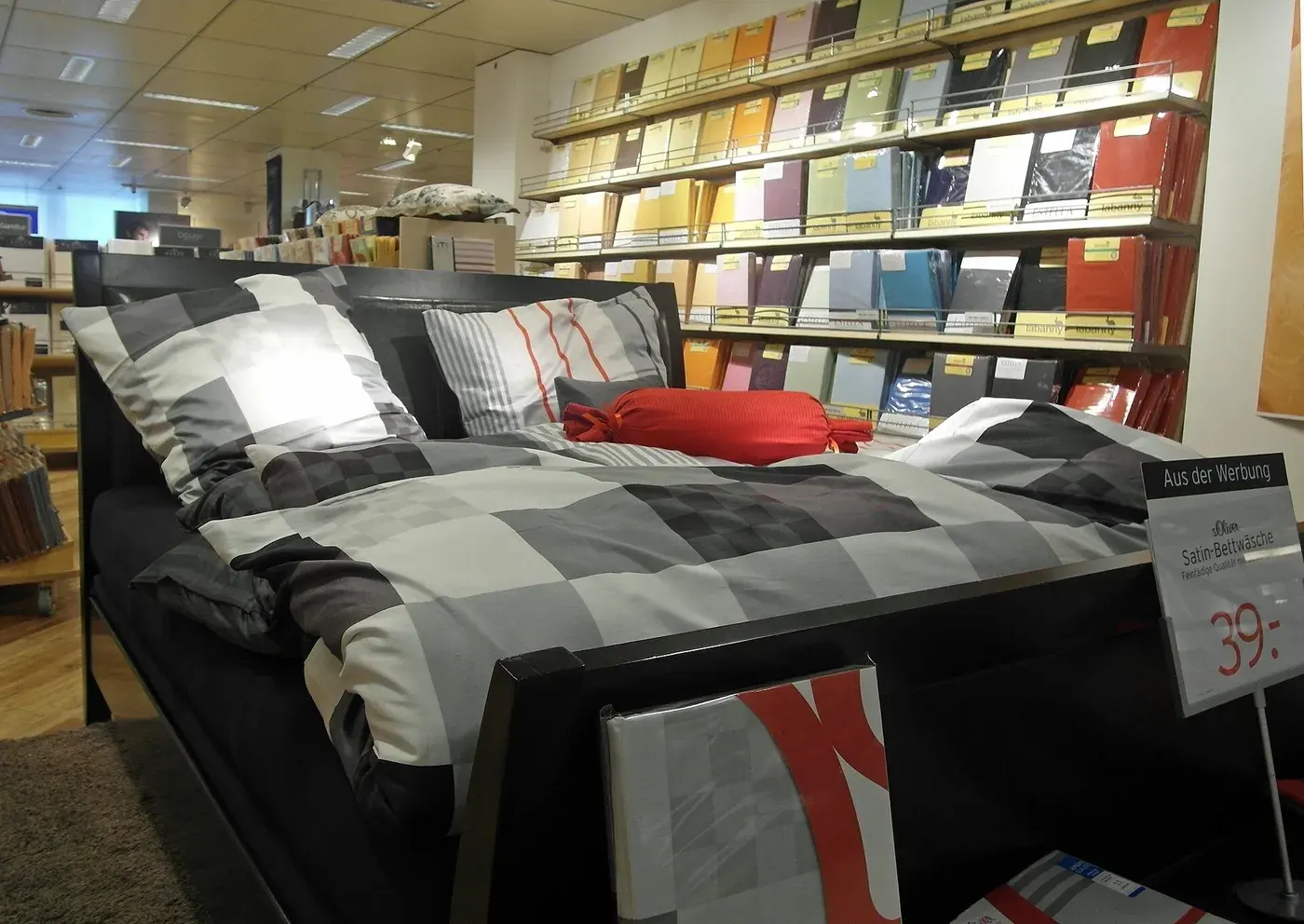
Bric a brac wholesale covers the used household goods that sit beside clothing: curtains, table linen, bedding and other items for the home, sold in bulk by weight. Lots are mixed, so what matters is how the goods are described, what the tariff and labelling rules say, and how you handle the lot on arrival.
What bric a brac wholesale covers
In the wholesale trade the term covers curtains, table linen, bedding and other household items. The common thread is the home, not the garment.
That is a wide field. Used household items wholesale vary from one delivery to the next, and for this reason a buyer needs two things from a supplier: a written description of what the lot should contain, and a way to see it before confirming. Photographs and descriptions are indicative only, so the offer remains the reference.
How mixed household lots are made up
A household lot is sold by weight, and its contents differ from lot to lot. A household lot may hold textiles for the home, small household items such as kitchen items, decoration, frames and baskets, or both, so the first question is which of them you are buying.
Ask the supplier how the lot is organised before you decide. Is it one category or several, and are curtains, bed linen and table linen grouped or mixed? Are the textiles clean and folded, or loosely packed? Are small household items packed in a way that avoids damage? Answers to these questions affect your handling time far more than the headline description.
Household textiles in the customs tariff
The tariff gives household textiles their own place. In the Harmonized System, as published in the UK Trade Tariff, chapter 63 covers other made-up textile articles and worn clothing. Household textiles are listed in headings 6301 to 6304, and worn ones may fall under heading 6309 when two conditions are met together.
Note 3 to chapter 63 says that heading 6309 applies to clothing, blankets and travelling rugs, bed linen, table linen, toilet linen and kitchen linen, furnishing articles other than carpets and tapestries, and footwear and headgear. Both conditions must be met: appreciable wear, and presentation in bulk or in bales, sacks or similar packings.
| Product family | Heading | Heading text in the tariff |
|---|---|---|
| Blankets | 6301 | Blankets and travelling rugs |
| Bed, table, toilet and kitchen linen | 6302 | Bed linen, table linen, toilet linen and kitchen linen |
| Curtains | 6303 | Curtains (including drapes) and interior blinds; curtain or bed valances |
| Other furnishings | 6304 | Other furnishing articles, excluding those of heading 9404 |
| Used articles of the above in bulk or bales | 6309 | Worn clothing and other worn articles |
| Used rags and scraps | 6310 | Used or new rags, scrap twine, cordage, rope and cables and worn-out articles of twine, cordage, rope or cables, of textile materials |
Heading 6309 names only textile articles, footwear and headgear. How a mixed lot that also holds other household items is classified is a question for your customs agent, who will look at the actual contents and the packing; the rule gives only the frame.
What the tariff means by made-up articles
The note that opens chapter 63 narrows the field further. Sub-chapter I, which holds headings 6301 to 6307, applies only to made-up articles of any textile fabric, and it does not cover goods of chapters 56 to 62 or the worn articles of heading 6309. In other words, the first group describes made-up articles that are not worn articles of heading 6309, and the same curtain can move between the two depending on wear and packing.
Keep that in mind when a supplier or a transport paper uses a heading. A heading in the 6301 to 6304 range describes made-up articles, and heading 6309 describes worn articles presented in bulk or in bales. If the description on the offer, the invoice and the consignment note do not agree, ask which one is right before the goods move.
Labelling household textiles
Regulation (EU) No 1007/2011 on textile fibre names and labelling applies to textile products and to products that contain at least 80 percent textile fibres by weight. Annex V lists items that need no fibre label, among them "Old made-up textile products, where explicitly stated to be such", table mats with several components and a surface of not more than 500 cm2, and oven gloves and cloths.
The Commission's FAQ on the regulation gives a boundary case that matters for bedding: feather beds filled with down may contain less than 80 percent textile fibres by weight and then fall outside the scope, while the textile components of mattress coverings are treated as textile products. The FAQ is not legally binding. If your shop sells bedding or curtains, ask a trade adviser what the label on the shelf must say.
Safety of second hand household goods
Household items are used in daily life, and the safety rules do not stop at the used goods. UK government guidance on the EU General Product Safety Regulation (2023/988), written for Northern Ireland, says the regulation applies to products placed on or made available to the market that are new, used, repaired or reconditioned. It adds that, in general, second hand products must not be sold or re-sold unless they are safe.
The same guidance names two exemptions: antiques, and products explicitly sold on the understanding that they must be repaired or reconditioned before safe use, which has to be clearly communicated. For a buyer, the practical step is simple. Check the lot for items that could hurt a user, such as broken parts or items with sharp edges, and set them aside before the stock reaches the shelf.
Cleaning and hygiene for a household lot
When second hand home textiles bulk arrive, they come from many homes, and their condition ranges from fresh to marked. Do not display them straight from the unit. Sort by type, shake out in a ventilated area away from other stock, and look for stains, tears, odours and signs of mould before you decide what to clean and what to sell as it is.
Keep textiles from different sources apart while you sort, and keep small household items off the same tables until they are checked. Wash your hands after handling, particularly before you eat, and let staff who are sensitive to dust use gloves. Washing before display is a decision for the reseller, and the care label on the item, where present, is the first guide to the programme.
What to look at in each household category
A short routine for the first unit saves time later. The points below are practical suggestions based on how these goods are used, not rules.
- Curtains: whether they are in pairs, their length, the lining and the heading tape, and any sun damage along the folds.
- Bed linen and bedding: whether sets match, stains, thin patches, torn seams and worn elastic on fitted sheets.
- Table linen: complete sets, stains that remain after washing, burn marks and frayed hems.
- Blankets and throws: moth damage, pilling and odours, which can be the hardest to remove.
- Small household items (kitchen items, decoration, frames, baskets): chips, cracks and missing parts, and whether sets are complete.
Lots are sold by weight, so heavier pieces such as lined curtains and blankets take a larger share of the total than light table linen. Ask for the approximate number of pieces per category as well as the weight, so you can judge how much you will really have to sell.
Who resells household lots
Market stalls and second hand shops are the usual buyers of household lots. A stall can turn a pile of curtains into a rail of sorted lengths and a table of linen, and customers browse it as they would a flea market. A shop with a home corner can give bedding and table linen their own shelf, and treat small household items as a rotating display.
The choice of lot follows the way you sell. A stall that sells by the piece values variety and low handling time. A shop that wants a tidy shelf values lots that are already grouped. In both cases it helps to describe the stall or shop in the enquiry, so that the offer is written for your use.
The household textile flow in numbers
Household textiles are part of a large stream. The European Environment Agency's 2023 briefing on exports of used textiles cites 14.8 kg of clothing, footwear and household textiles consumed per person in the EU in 2020. It notes that textiles under code 6309 are rarely considered waste while rags and scraps under code 6310 might be.
The Waag booklet (2021) says that bed linen that cannot be reused is predominantly sold to the wiper industry. They are context for the market, not a forecast for any lot.
The EEA's 2024 briefing adds that the Waste Framework Directive requires EU Member States to set up separate collection systems for used textiles from 2025. Your local rules say where unsold pieces may go.
Questions for the supplier before you order
- Which categories does the lot contain: curtains, table linen, bedding, small household items?
- Are textiles and small household items packed separately, and how are fragile items protected?
- What is the weight per unit and in total, and how many units make up the order?
- Are photos or a short video of the lot available before I confirm?
- Which tier is the lot, and where is that confirmed in the written offer?
Send the answers and a short description of how you resell through the contact form. The bric-a-brac catalog page lists the household groups, the sorting grades guide explains tiers and the buying guide walks through the steps of a first order.
Frequently asked questions
Can a lot be limited to one household category?
Ask in the enquiry. Whether a single category is available depends on the product type and is confirmed in the offer. Say which household items you resell and how you sell them, and the offer can describe a lot that fits that use.
Are used curtains and bed linen classified as worn articles at customs?
The tariff note for heading 6309 covers bed linen, table linen and furnishing articles, but only when they show signs of appreciable wear and are presented in bulk or in bales, sacks or similar packings. Your customs agent decides how that applies to your shipment.
Do household textiles need a fibre composition label?
Regulation (EU) No 1007/2011 covers products with at least 80 percent textile fibres by weight, and Annex V exempts old made-up textile products where explicitly stated to be such. Down-filled feather beds can fall outside the scope. Ask a trade adviser what your shelf label must say.
Do second hand household goods have to be safe to sell?
UK government guidance on the EU General Product Safety Regulation says the regulation applies to used products too, and that second hand products must in general not be sold unless they are safe. Check the lot and set aside broken parts and sharp edges.
How should I clean second hand curtains and linen before display?
Sort by type, shake out in a ventilated area, and look for stains, tears, odours and mould. Follow the care label where there is one and decide what to wash and what to sell as it is. Wash your hands after handling and keep small household items away from textile tables.
What can I do with household textiles that do not sell?
Waag reports that bed linen which cannot be reused mostly goes to the wiper industry, and the EU's Waste Framework Directive requires separate collection of used textiles from 2025. Check your local collection rules rather than discarding unsold pieces with household waste.